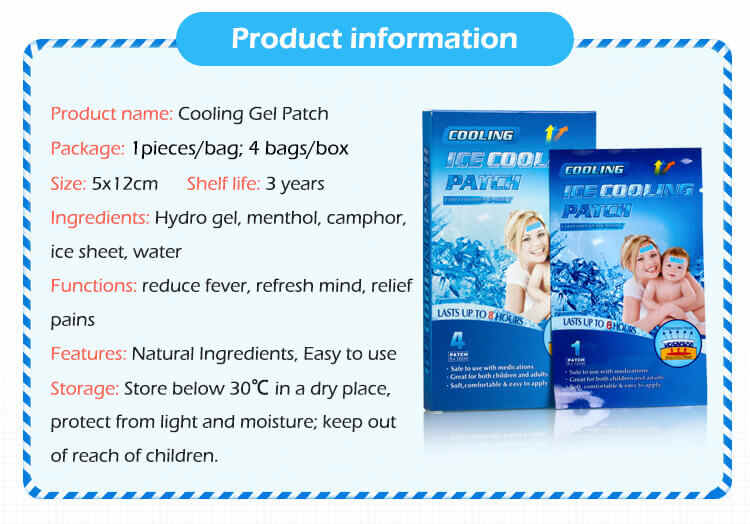
-
 KONGDY
Is FDA Approval Mandatory for Medical Cooling Gel Patches in the USA? A Complete Compliance Guide
Medical cooling gel patches have become popular in the U.S. market for fever relief, migraine care, sports recovery, skin soothing, and general first aid applications. As brands expand their product lines through a Medical Cooling Gel Patch Manufacturer, Medical Cooling Gel Patch OEM, or Medical Cooling Gel Patch Supplier, one critical question always arises:
Is FDA approval mandatory for selling medical cooling gel patches in the United States?
This question determines everything from product classification to regulatory strategy to packaging claims. Understanding U.S. FDA requirements is essential for brands producing a Custom Medical Cooling Gel Patch or launching a Private Label Medical Cooling Gel Patch in retail stores, pharmacies, or online platforms.
This in-depth guide provides a clear, credible, and persuasive explanation of the FDA rules, risk classifications, and compliance expectations that every international or domestic brand must understand.
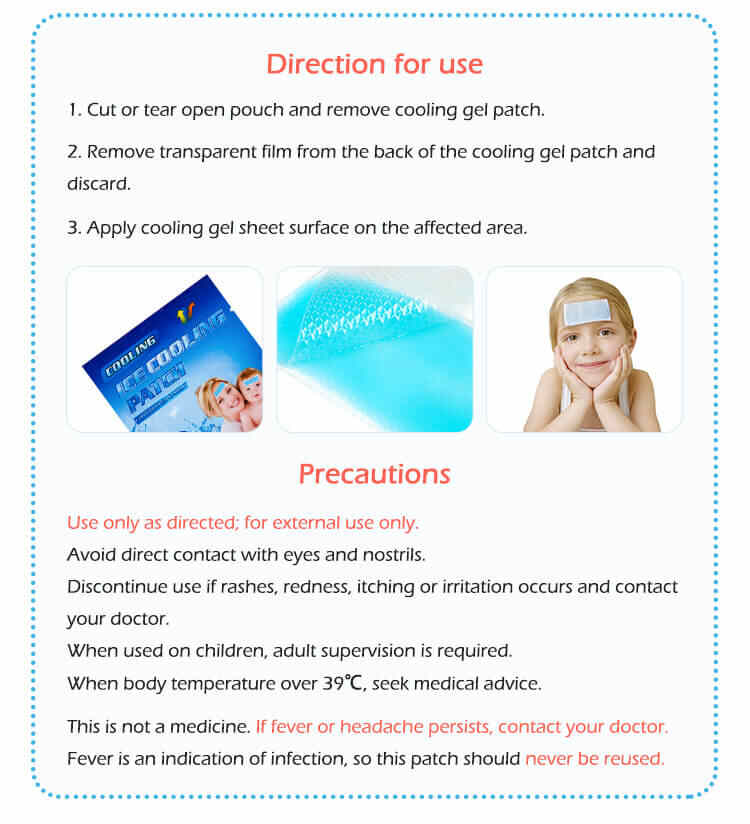
1. Do Medical Cooling Gel Patches Require FDA Approval? (Short Answer: Usually No, but They May Require FDA Registration)
Most medical cooling gel patches do not require FDA “approval”, because they are typically classified as low-risk Class I medical devices. FDA approval applies mainly to high-risk and Class III devices, which gel patches are not.
However, not requiring FDA approval does not mean they are unregulated.
In most cases, brands selling cooling gel patches must follow these FDA requirements:
**✔ FDA Establishment Registration
✔ Medical Device Listing
✔ GMP (Good Manufacturing Practices) compliance under 21 CFR Part 820
✔ Accurate labeling without medical claims outside the allowed scope
✔ Safety-tested materials and biocompatibility evidence**
This makes FDA compliance mandatory—even if approval is not.
If a Medical Cooling Gel Patch Manufacturer or Medical Cooling Gel Patch Supplier tells you that “the patches do not need any FDA regulation,” that is incorrect and risky.
2. How FDA Classifies Medical Cooling Gel Patches
FDA classifies products based on their intended use and claims.
A. Products without medical claims → Often Class I, exempt from premarket approval
Examples:
“Cooling sensation patch”
“Skin-soothing cooling patch”
“Gel patch for temporary comfort”
“Cooling effect patch for normal skin”
These usually require:
Device listing
Establishment registration
GMP compliance
But no FDA premarket approval.
B. Products with medical treatment claims → Higher regulatory requirements
If the patch claims:
fever reduction
migraine treatment
anti-inflammatory effects
pain relief
therapeutic/medical outcomes
Then FDA may classify the product under specific device categories that come with stricter requirements.
For example:
Fever Relief Cooling Gel Patch → may fall under medical cooling treatment devices
Pain-relief gel patch → may fall under external analgesic or therapeutic device category
Migraine Cooling Gel Patch → may require safety and effectiveness evidence
The more medical the claim, the more regulatory requirements apply.
This is where partnering with a professional Medical Cooling Gel Patch OEM becomes crucial.
3. Why Many Brands Get into Trouble: Misunderstanding Claims
Most compliance risks come from packaging or advertising claims.
High-risk wording (requires approval, documentation, or additional classification):
“Treats fever”
“Eliminates migraine”
“Heals inflammation”
“Medical treatment patch”
Safe/low-risk wording (Class I accessory or wellness product):
“Provides a cooling effect”
“Helps soothe the skin”
“Supports natural comfort”
“Non-medicated cooling”
FDA focuses more on what you claim than on what you sell.
A Custom Medical Cooling Gel Patch can be categorized as:
cosmetic / wellness
Class I medical device
Class II medical device
…depending entirely on claims.
Thus, compliance is a combined responsibility of the brand owner and the Medical Cooling Gel Patch Manufacturer.
4. Does the Manufacturer Need FDA Registration?
If the product is sold in the USA, then yes—your manufacturer must comply with FDA regulations.
A compliant Medical Cooling Gel Patch Manufacturer must have:
**✔ FDA Establishment Registration
✔ Device Listing
✔ Quality Management System aligned with 21 CFR 820
✔ Biocompatibility testing (ISO 10993)
✔ Cleanroom or controlled environment records
✔ Batch traceability documentation**
If you use a Medical Cooling Gel Patch OEM in China, Korea, India, or elsewhere, they must also:
register as a foreign FDA establishment
list your device
provide you with documentation for U.S. importation
Many low-cost factories are not registered, putting brands at risk of customs seizure.
Always check the manufacturer’s FDA status before placing orders.
5. What Documents Should Brands Request from an OEM?
To safely launch a Private Label Medical Cooling Gel Patch, request:
1. FDA Establishment Registration Number
Verify on FDA’s website.
2. Device Listing Number
Matches the patch category.
3. ISO 13485 Certification
Ensures proper quality system management.
4. GMP (21 CFR Part 820) Compliance Statement
Showing alignment with U.S. medical device regulations.
5. Biocompatibility Test Reports (ISO 10993)
Essential for all skin-contact medical patches.
6. MSDS / Ingredients List
For safety and regulatory evaluation.
7. COA (Certificate of Analysis)
For each batch.
These documents confirm that your Medical Cooling Gel Patch Supplier truly meets FDA expectations.
6. How FDA Treats Private Label vs. Custom Development
Private Label Medical Cooling Gel Patch
Already tested
Already listed by the manufacturer
Faster compliance
Lower regulatory burden
Custom Medical Cooling Gel Patch
New formula = new validation
New materials may require new testing
Additional FDA classification review may be needed
Longer timeline and higher compliance risk
The risk is not from the product type but from the regulatory documentation required.
7. The Biggest Mistake Brands Make: Choosing Non-Compliant Low-Cost Factories
A cheap supplier may:
lack FDA registration
produce in non-controlled workshops
skip biocompatibility testing
use low-purity gel raw materials
rely on inconsistent manufacturing processes
This leads to:
customs detention
sales bans
product recalls
Amazon listing removal
In contrast, a certified Medical Cooling Gel Patch Manufacturer with a strong quality system protects your brand from legal and financial risk.
8. How to Ensure Full FDA Compliance for Your Patch
✔ Step 1: Choose an FDA-registered OEM
Always verify the manufacturer’s status.
✔ Step 2: Confirm correct device classification
Determine the right category based on claims.
✔ Step 3: Ensure proper labeling
Avoid restricted medical claims unless supported by documentation.
✔ Step 4: Maintain your own brand registration
Private label sellers must also register with FDA.
✔ Step 5: Keep all compliance documents on file
For inspections, audits, or importer checks.
With the right Medical Cooling Gel Patch Supplier, compliance becomes straightforward.
Conclusion: FDA Approval Is Usually Not Required — But FDA Compliance Is Mandatory
Medical cooling gel patches generally do not need FDA approval if they fall under Class I exemption.
However, they are still regulated, and both the brand and the Medical Cooling Gel Patch Manufacturer must comply with multiple FDA requirements.
Whether you are launching a Custom Medical Cooling Gel Patch or a Private Label Medical Cooling Gel Patch, choosing a professional, certified, and FDA-registered OEM is the key to entering the U.S. market safely and successfully.
Related Questions & Short Answers
1. Do cooling gel patches require FDA approval?
No approval is required, but FDA registration and compliance are mandatory.
2. Can I sell a Private Label Medical Cooling Gel Patch on Amazon USA?
Yes—but Amazon requires proof of FDA compliance and documentation from your manufacturer.
3. How do I verify a Medical Cooling Gel Patch Supplier is FDA-registered?
Check their registration on the FDA Establishment Registration & Listing database.
4. Do Custom Medical Cooling Gel Patch formulas need new testing?
Yes, because new formulas require additional stability and biocompatibility testing.
5. Can a Medical Cooling Gel Patch OEM help with FDA paperwork?
A qualified OEM will provide all documents needed for FDA importation and listing.


