-
 KONGDY
How Do Sunburn Cooling Patches Lower Skin Temperature?
Sunburn is not just a cosmetic concern—it is a form of acute skin inflammation caused by excessive heat and UV exposure. As global demand for effective after-sun care continues to grow, Sunburn Cooling Patches have emerged as a highly efficient, convenient, and skin-friendly solution. But for brands, distributors, and retailers, one critical question often arises:
How do Sunburn Cooling Patches actually lower skin temperature—and why does this mechanism matter when choosing a Sunburn Cooling Patches Manufacturer or OEM partner?
Understanding the science behind cooling patches is essential for evaluating product quality, differentiation potential, and long-term market competitiveness. This article provides an in-depth, SEO-aligned explanation of how Sunburn Cooling Patches lower skin temperature, and why manufacturing expertise plays a decisive role in performance—whether you source Custom Sunburn Cooling Patches or Private Label Sunburn Cooling Patches from a professional Sunburn Cooling Patches Supplier.

Why Lowering Skin Temperature Matters After Sunburn
Sunburned skin experiences:
Elevated surface temperature
Inflammation and vasodilation
Increased water loss
Heightened nerve sensitivity
Reducing skin temperature helps:
Calm inflammation
Reduce pain and burning sensation
Prevent secondary skin damage
Accelerate recovery
A reliable Sunburn Cooling Patches Manufacturer designs products specifically to address these physiological responses safely and effectively.
The Core Cooling Principle: Physical Cooling, Not Medication
Unlike oral painkillers or topical drugs, Sunburn Cooling Patches primarily rely on physical cooling mechanisms, making them suitable for frequent and gentle use.
The main temperature-lowering effects include:
Heat absorption
Evaporative cooling
Moisture-based thermal regulation
The effectiveness of these mechanisms depends heavily on formulation design and manufacturing precision.
Heat Absorption Through Hydrogel Technology
How Hydrogel Absorbs Heat
Most high-quality Sunburn Cooling Patches are based on hydrogel systems. Hydrogel contains a high percentage of purified water bound within a polymer matrix.
When applied to warm skin:
Heat transfers from the skin to the cooler hydrogel
The hydrogel absorbs and disperses this heat
Skin surface temperature decreases gradually
A skilled Sunburn Cooling Patches OEM carefully balances water content and polymer structure to maximize heat absorption without causing excessive moisture loss.
Evaporative Cooling: A Natural Heat-Reduction Process
Controlled Evaporation for Sustained Cooling
As the water in the hydrogel slowly evaporates:
Heat energy is drawn away from the skin
This creates a continuous cooling effect
Skin temperature remains lower for extended periods
Unlike ice packs, evaporative cooling is gentle and non-shocking, making it ideal for sunburned skin.
A professional Sunburn Cooling Patches Manufacturer designs evaporation rates precisely—too fast causes dryness, too slow reduces cooling effectiveness.
Moisture Retention and Skin Barrier Protection
Cooling Without Drying the Skin
One of the key advantages of Sunburn Cooling Patches over sprays or gels is moisture retention.
High-quality patches:
Lock moisture against the skin
Prevent excessive transepidermal water loss
Support the skin’s natural barrier repair
This dual effect—cooling and hydration—is essential for sunburn recovery and requires advanced material selection by an experienced Sunburn Cooling Patches Supplier.
Role of Cooling Ingredients (Optional but Strategic)
Ingredient-Assisted Cooling Sensation
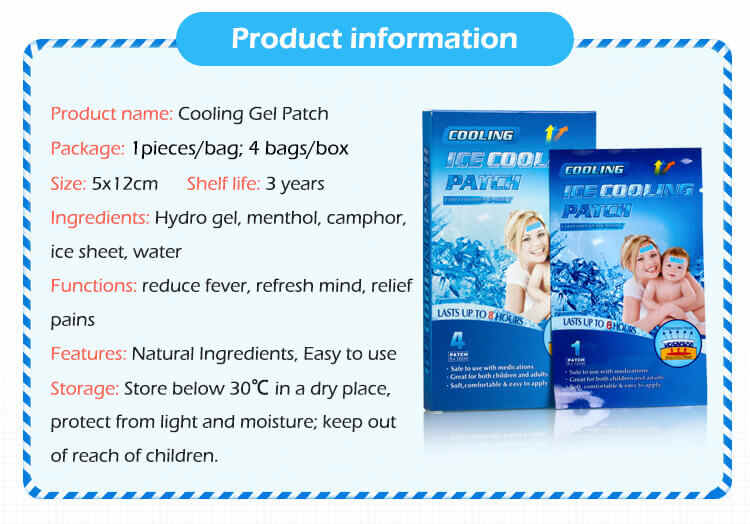
Some Custom Sunburn Cooling Patches include mild cooling agents such as:
Menthol alternatives
Botanical cooling extracts
Naturally derived soothing compounds
These ingredients do not lower temperature chemically, but they stimulate cold receptors in the skin, enhancing the perception of cooling.
A responsible Sunburn Cooling Patches OEM carefully controls concentration to avoid irritation, especially on sun-damaged skin.
Adhesion and Surface Contact: Why Patch Design Matters
Better Contact = Better Cooling
To effectively lower skin temperature, a patch must maintain consistent contact with the skin.
A reliable Sunburn Cooling Patches Manufacturer optimizes:
Adhesive strength (not too strong, not too weak)
Patch flexibility to follow body contours
Breathability to prevent heat buildup
Poor adhesion reduces heat transfer efficiency and compromises cooling performance.
Controlled Cooling vs. Ice or Cold Packs
Why Sunburn Cooling Patches Are Safer
Ice packs lower temperature rapidly but can:
Shock damaged skin
Restrict blood flow
Increase irritation risk
Sunburn Cooling Patches offer:
Gradual temperature reduction
Continuous, stable cooling
No risk of frost injury
This makes them safer for extended use, especially on sensitive areas like shoulders, back, or face.
Manufacturing Precision Determines Cooling Performance
Not All Cooling Patches Are Equal
The cooling effectiveness of Sunburn Cooling Patches depends on:
Hydrogel formulation ratios
Raw material purity
Mixing and curing processes
Thickness control
Backing material selection
Only an experienced Sunburn Cooling Patches Manufacturer can deliver consistent temperature reduction across large production batches.
Custom vs. Private Label: Cooling Performance Differences
Private Label Sunburn Cooling Patches
Private label products usually offer:
Standard cooling duration
General-purpose formulations
Limited performance differentiation
They are suitable for fast market entry but may lack optimization for specific use cases.
Custom Sunburn Cooling Patches
Custom products allow brands to work with a Sunburn Cooling Patches OEM to tailor:
Cooling intensity
Duration (short vs. long-lasting)
Moisture balance
Skin sensitivity levels
This results in superior performance and stronger brand positioning.
Temperature Reduction: What Consumers Actually Experience
High-quality Sunburn Cooling Patches typically reduce skin surface temperature by:
2–5°C within minutes, depending on formulation
Maintain lower temperature for several hours
This controlled reduction is enough to relieve discomfort without interfering with natural healing.
Why the Sunburn Cooling Patches Supplier Matters
A professional Sunburn Cooling Patches Supplier ensures:
Stable cooling performance
Repeatable production quality
Safety testing and skin compatibility
Regulatory-ready documentation
Suppliers lacking technical depth often rely on generic formulas that fail to deliver meaningful temperature reduction.
Cooling Performance as a Brand Differentiator
Consumers may not understand the science—but they feel the results.
Brands that work with advanced Sunburn Cooling Patches Manufacturers can market:
Faster cooling relief
Longer-lasting comfort
Gentle, non-irritating performance
This directly influences reviews, repeat purchases, and brand trust.
Final Conclusion: Cooling Is Science, Not Guesswork
So, how do Sunburn Cooling Patches lower skin temperature?
They do so through a carefully engineered combination of heat absorption, controlled evaporation, moisture retention, and precise skin contact—all driven by manufacturing expertise.
Whether you choose Private Label Sunburn Cooling Patches or invest in Custom Sunburn Cooling Patches, the capabilities of your Sunburn Cooling Patches Manufacturer and Sunburn Cooling Patches OEM determine how effectively your product performs in real-world use.
Frequently Asked Questions (FAQs)
1. Do Sunburn Cooling Patches use chemicals to lower temperature?
No. Most rely on physical cooling and moisture-based heat absorption.
2. How long does the cooling effect last?
Typically several hours, depending on formulation and environment.
3. Are Custom Sunburn Cooling Patches more effective than private label?
Often yes, because cooling performance can be optimized.
4. Can cooling patches damage sunburned skin?
No, when produced by a qualified Sunburn Cooling Patches Manufacturer.
5. Are they better than ice packs?
Yes, because they provide gentle, controlled cooling without skin shock.
6. Does the supplier affect cooling performance?
Absolutely. Cooling effectiveness depends heavily on manufacturing quality.


