-
 KONGDY
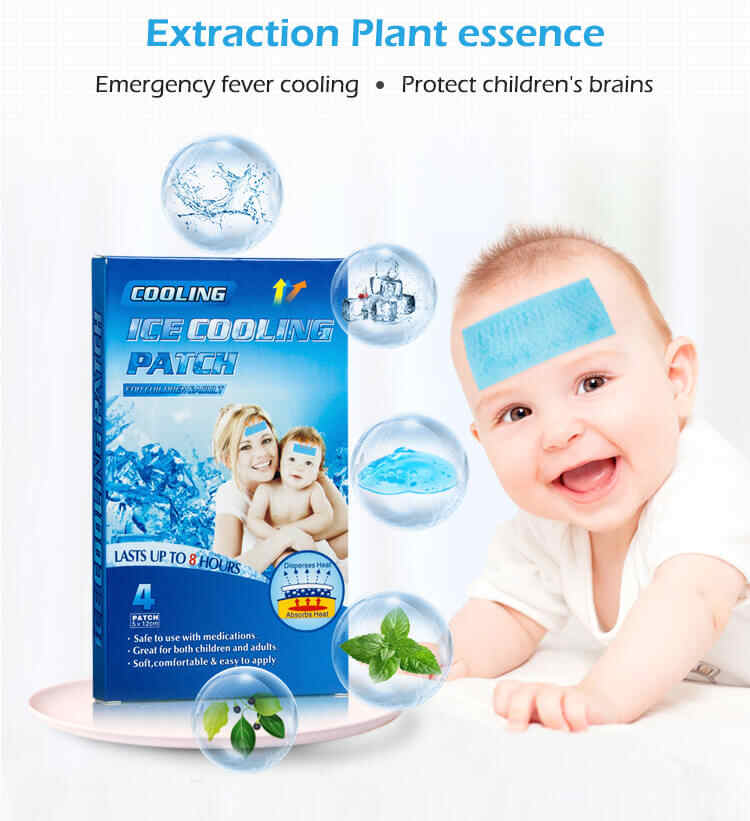
How Can Headache Cooling Patch OEM Reduce Production Cost?
In today’s increasingly competitive wellness and healthcare market, cost control is no longer just a manufacturing concern—it is a strategic advantage. For brands launching a Private Label Headache Cooling Patch or developing a Custom Headache Cooling Patch, production cost directly impacts retail pricing, profit margins, market competitiveness, and long-term scalability.
This is where a professional Headache Cooling Patch OEM plays a critical role. Unlike ordinary contract manufacturers, a mature Headache Cooling Patch Manufacturer does far more than simply produce goods—it optimizes the entire supply chain, production system, material sourcing, labor efficiency, and quality control framework to systematically reduce production cost without sacrificing quality.
In this article, we will provide a deep, structured, and persuasive analysis of how a Headache Cooling Patch OEM can reduce production cost, and why choosing the right Headache Cooling Patch Supplier is one of the most important strategic decisions for any private label brand.
1. Why Production Cost Matters So Much for Private Label Headache Cooling Patch Brands
For a Private Label Headache Cooling Patch brand, production cost directly determines:
Gross profit margin
Pricing flexibility
Distributor competitiveness
Marketing budget capacity
Long-term business sustainability
Unlike traditional manufacturers, private label brands typically invest heavily in:
Branding
Digital marketing
Platform commissions
Influencer promotion
Warehousing and logistics
If production cost is too high at the OEM level, there is little room left for marketing and scaling. This is why working with a cost-optimized Headache Cooling Patch OEM is essential to long-term success.
2. Economies of Scale: The Primary Cost Advantage of Headache Cooling Patch OEMs
One of the most powerful cost-reduction tools available to a Headache Cooling Patch OEM is large-scale production.
How Economies of Scale Reduce Cost:
A professional Headache Cooling Patch Manufacturer produces:
Thousands to millions of units per month
For multiple domestic and international brands
Using shared production lines, shared equipment, and shared labor
This allows the factory to:
Purchase raw materials in bulk at lower prices
Spread equipment depreciation across larger production volumes
Lower per-unit labor costs through automation
Reduce per-unit energy and overhead costs
For a Custom Headache Cooling Patch brand, this means you benefit from the pricing power of a much larger manufacturing ecosystem, even if your brand is still growing.
3. Raw Material Sourcing Optimization
Raw materials typically account for 40%–60% of total production cost. A professional Headache Cooling Patch Supplier reduces cost through long-term strategic sourcing.
How OEMs Lower Raw Material Costs:
Long-term contracts with gel, menthol, adhesive, and fabric suppliers
Multi-vendor bidding systems to avoid monopoly pricing
Bulk purchasing across multiple product categories
Continuous replacement of high-cost materials with equivalent low-cost alternatives (after safety validation)
For Private Label Headache Cooling Patch brands, this means:
Stable material pricing despite market fluctuations
Lower vulnerability to supply chain disruptions
Predictable cost structure for long-term planning
4. Formulation Optimization in Custom Headache Cooling Patch Development
Many brands believe that customization automatically increases production cost. This is not always true—if formulation is optimized correctly.
A qualified Headache Cooling Patch OEM applies cost engineering at the formulation stage by:
Optimizing menthol and cooling agent concentration
Balancing herbal extracts with cost-effective cooling polymers
Replacing premium imported raw materials with validated domestic alternatives
Adjusting gel density to optimize performance-to-cost ratio
With proper formulation engineering, a Custom Headache Cooling Patch can often match or exceed premium performance—at a lower raw material cost.
5. Automated Production Lines: Reducing Labor Cost and Human Error
Labor is another major cost driver. Advanced Headache Cooling Patch Manufacturers significantly reduce labor cost through automation.
How Automation Reduces Cost:
Automated gel mixing systems
Computer-controlled coating and lamination
High-speed cutting and patch shaping
Automated pouch sealing and packing
Vision-based defect detection
Compared to manual workshops, automated OEM lines can:
Reduce labor cost per unit by 30%–60%
Increase yield rate
Lower product defect rate
Reduce rework and scrap costs
For Private Label Headache Cooling Patch brands, this translates into:
Lower per-unit production cost
Higher batch consistency
Faster order fulfillment
6. Production Standardization Across Multiple Brands
A mature Headache Cooling Patch OEM rarely builds every product from scratch. Instead, it creates standardized modular production systems.
For example:
Standard gel base modules
Standard adhesive layers
Standard patch backing materials
Standard pouch dimensions
Customization is then achieved through:
Formula fine-tuning
Patch size adjustment
Branding and packaging differentiation
This modular production system minimizes:
Line changeover time
Equipment downtime
Small-batch inefficiency
Waste caused by excessive customization
As a result, even a Custom Headache Cooling Patch can be produced at near-standard cost levels.
7. Packaging Cost Optimization by Headache Cooling Patch OEM
Packaging is a hidden cost driver that many brands underestimate. A professional Headache Cooling Patch Manufacturer reduces packaging cost through:
Standardized pouch sizes
High-volume printing contracts
Shared carton specifications
Optimized pallet configurations
Reduced freight volume through compact design
For Private Label Headache Cooling Patch brands, this results in:
Lower unit packaging cost
Lower international shipping costs
Reduced warehousing expenses
Smart packaging engineering can reduce total landed cost by 10%–20% without sacrificing shelf appeal.
8. Yield Rate & Waste Reduction Through QC Integration
Poor QC increases production cost through:
Material waste
Rework
Returned goods
Complaint handling
Recall risk
A qualified Headache Cooling Patch OEM integrates cost control directly into its quality control system by:
Using real-time defect detection
Monitoring process stability
Preventing batch deviation
Eliminating recurring defects at root cause
Higher yield rate = lower cost per unit.
This is why the most cost-effective Headache Cooling Patch Suppliers are also the ones with the strongest QC systems.
9. Supply Chain Integration Reduces Middleman Cost
Many small factories rely on layers of traders:
Raw material supplier → Agent → OEM → Trading company → Brand
Each layer adds margin.
A professional Headache Cooling Patch Manufacturer operates as a direct integrated OEM, offering:
Direct raw material purchasing
In-house formulation
In-house production
In-house packaging
Direct export handling
For Private Label Headache Cooling Patch brands, this removes multiple layers of:
Agency markup
Trading margin
Coordination cost
This direct model typically lowers FOB unit cost by 15%–30%.
10. Logistics & Export Optimization
A full-service Headache Cooling Patch Supplier optimizes logistics cost by:
Consolidating shipments
Optimizing container loading
Reducing carton volume
Matching shipping modes (air/sea/rail) to urgency
Using bonded warehouses and duty-optimized routes
For international private label brands, logistics optimization often determines whether a product is profitable or barely viable.
11. Forecast-Based Production Planning Cuts Inventory Cost
Another hidden cost is inventory pressure.
An experienced Headache Cooling Patch OEM supports cost reduction through:
Rolling production forecasts
Safety stock optimization
Production scheduling alignment with sales cycles
Flexible MOQs for scaling brands
This helps Private Label Headache Cooling Patch brands avoid:
Overproduction
Stock aging
Capital lock-up
Warehouse overflow
Lower inventory burden = stronger cash flow = stronger brand growth capacity.
12. Test & Certification Cost Sharing
Product testing and compliance certification can be expensive, especially for:
FDA
CE
MSDS
Stability reports
Microbial testing
A mature Headache Cooling Patch OEM often amortizes these costs across:
Multiple brands using the same base formulation
Multiple export markets
Platform compliance programs
This allows Custom Headache Cooling Patch brands to:
Use existing safety data
Reduce repeated test costs
Shorten time to market
Lower compliance budget
13. Long-Term OEM Cooperation Reduces Negotiation and Switching Costs
Frequent supplier switching increases hidden costs such as:
Re-qualification
Re-testing
New tooling
New packaging setup
New QC validation
A long-term partnership with a reliable Headache Cooling Patch Manufacturer reduces:
Negotiation cycles
Engineering changes
Onboarding cost
Risk of operational disruption
Stable OEM cooperation = stable cost structure.
14. How Cost Reduction Strengthens Private Label Brand Competitiveness
When production cost is optimized by the Headache Cooling Patch OEM, private label brands gain:
Stronger price competitiveness
Higher advertising ROAS
Greater channel expansion ability
Stronger distributor incentives
Higher overall business valuation
In other words, OEM cost control directly translates into brand growth power.
15. The Risk of Choosing Low-Cost but Non-Professional OEMs
Some brands mistakenly pursue the “lowest possible price” rather than the “lowest total cost.”
Unprofessional low-price manufacturers often cause:
High defect rates
Shipment delays
Customs rejections
Platform delistings
Product recalls
Legal compensation
The real cost of failure is always far higher than the apparent savings.
A truly cost-efficient Headache Cooling Patch Supplier balances:
Cost + Quality + Compliance + Stability
16. Conclusion: How Headache Cooling Patch OEM Truly Reduces Production Cost
A professional Headache Cooling Patch OEM does not reduce cost by cutting corners—it reduces cost through:
Scale
Process optimization
Automation
Material engineering
Supply chain integration
QC-driven waste reduction
Logistics planning
Compliance cost sharing
For Private Label Headache Cooling Patch and Custom Headache Cooling Patch brands, choosing the right Headache Cooling Patch Manufacturer is not just a sourcing decision—it is a core business strategy that determines:
Your margin structure
Your market competitiveness
Your scaling speed
Your long-term brand survival
The lowest-cost OEM is rarely the best choice. The best OEM is the one that delivers the lowest total cost with the highest long-term stability.
Frequently Asked Questions (FAQ)
Q1: Can a Headache Cooling Patch OEM really reduce production cost without lowering quality?
A: Yes. Through automation, scale, formulation optimization, and waste control, OEMs reduce cost structurally without compromising safety.
Q2: Does Custom Headache Cooling Patch always cost more?
A: Not necessarily. Modular production and formulation engineering often allow custom products to stay near standard cost levels.
Q3: How does packaging affect total production cost?
A: Packaging impacts material cost, logistics cost, storage cost, and shipping volume. Smart packaging optimization can reduce 10%–20% of total landed cost.
Q4: What is the biggest hidden cost for Private Label Headache Cooling Patch brands?
A: Inventory pressure, defect returns, and compliance re-testing are often the largest hidden cost drivers.
Q5: Should small brands work with large OEMs?
A: Yes. Large OEMs offer lower per-unit cost, better QC, and stronger supply chain stability—even for scaling brands.
Q6: How do I evaluate if a Headache Cooling Patch Supplier is truly cost-efficient?
A: Evaluate not just unit price, but yield rate, defect rate, logistics efficiency, certification support, scalability, and stability.


