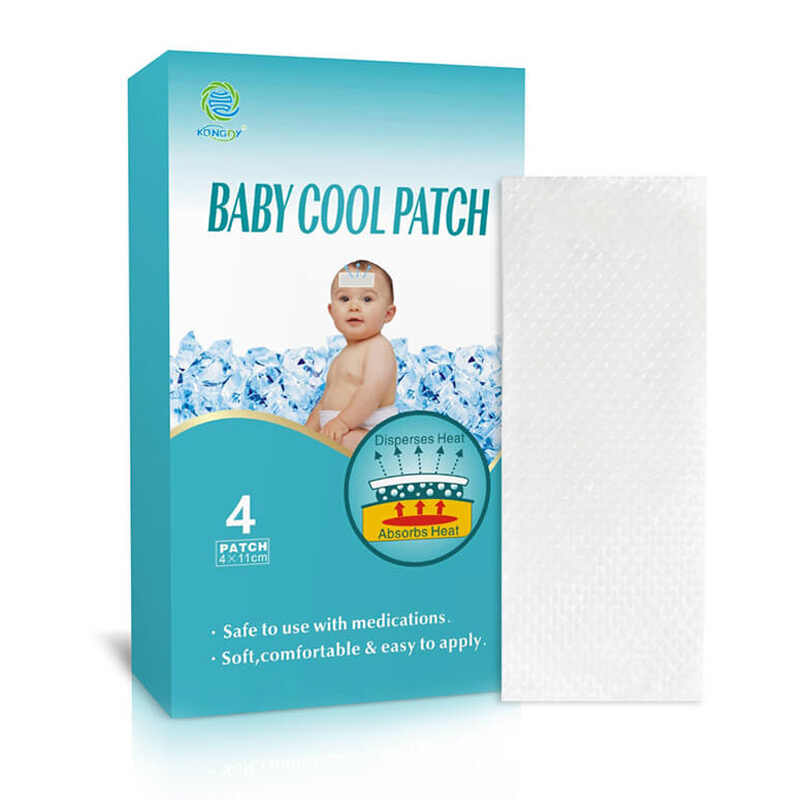
-
 KONGDY
Does Private Label Medical Cooling Gel Patch Rely Entirely on OEM Quality Systems?
Private Label Medical Cooling Gel Patch products have become a dominant choice for emerging health brands, pharmacies, online retailers, and distributors. As competition increases, many brands choose to collaborate with a Medical Cooling Gel Patch OEM to accelerate product development, reduce costs, and access advanced manufacturing capabilities. However, one critical question often arises:
Does a Private Label Medical Cooling Gel Patch completely rely on the OEM’s quality system — or does the brand itself also play a role?
This article provides an in-depth analysis of this question, explores how OEM quality systems affect brand success, and explains what responsibilities remain with the brand. Throughout the article, we will reference essential industry terms such as Medical Cooling Gel Patch Manufacturer, Medical Cooling Gel Patch OEM, Custom Medical Cooling Gel Patch, Private Label Medical Cooling Gel Patch, and Medical Cooling Gel Patch Supplier to satisfy Google SEO logic.
1. Understanding the Role of OEMs in Private Label Medical Cooling Gel Patch Production
When a brand chooses a Medical Cooling Gel Patch OEM, the manufacturer is responsible for major aspects of the production cycle, including:
Ingredient formulation
Material sourcing
Production line quality checks
Stability testing
Safety evaluations
Packaging and labeling compliance
Batch traceability
This means the OEM’s quality system becomes the operational foundation for any Private Label Medical Cooling Gel Patch.
A professional Medical Cooling Gel Patch Manufacturer often holds:
ISO 13485 medical device quality system certification
GMP (Good Manufacturing Practices) certification
CE / FDA registration
Raw material supplier audits
In-house microbiological and physical testing labs
These systems ensure that a Custom Medical Cooling Gel Patch meets required international standards.
But does this mean brands can rely 100% on the OEM?
Not exactly.
While OEMs manage most technical tasks, the brand still carries responsibility for product identity, market compliance, and claims.
2. What OEM Quality Systems Cover — and What They Do Not
OEM quality systems are designed to ensure product safety, consistency, and manufacturability. However, they do not cover all requirements from a branding or regulatory perspective.
✔ What OEM Quality Systems Cover
Raw Material Quality
Verified suppliers
Stable menthol/water/glycerin/gel base ingredients
Safety and purity tests
Production Safety
Sterile or controlled production environments
Contamination prevention
Adhesive and hydrogel integrity testing
Performance Consistency
Cooling effect retention
Adhesion testing
Shelf-life stability studies
Batch Quality Control
In-process inspections
Final product testing
Packaging intactness
Regulatory Documentation
Technical files
Testing report packages
MSDS and COA documentation
These capabilities allow a Medical Cooling Gel Patch Supplier to deliver high-quality OEM/Private Label products reliably.
✘ What OEM Quality Systems Do NOT Cover
Even a high-level Medical Cooling Gel Patch OEM cannot fully take over these responsibilities:
Brand Claims & Positioning
“Long-lasting,” “ultra-cooling,” or “hospital-grade” claims must be validated
Incorrect marketing can trigger regulatory problems
Packaging Legal Compliance
OEMs can advise, but final compliance is the brand’s responsibility
Local market regulatory rules vary by country
Market Surveillance
Monitoring customer feedback
Tracking adverse reactions
Managing product recalls, if necessary
Brand-Specific Customization Requirements
The OEM can follow instructions
But the brand must define its product differentiation strategy
Post-Market Responsibilities
Medical device reporting
Updating documentation
Ensuring long-term conformity
In summary:
OEM quality systems provide the backbone, but the brand must still manage compliance, marketing integrity, and market supervision.
3. Why Brands Cannot Rely Entirely on OEM Quality Systems
Even the best Medical Cooling Gel Patch Manufacturer cannot anticipate every brand’s positioning strategy or legal obligations. Several reasons reinforce why brands must maintain involvement:
(1) Private Label Brands Must Protect Their Reputation
When selling a Private Label Medical Cooling Gel Patch, the brand name appears on the package. If a quality issue occurs:
Consumers hold the brand responsible
Retailers hold the brand accountable
Market regulators contact the brand
Therefore, brands must verify OEM quality processes independently.
(2) Brand Claims May Require Additional Testing
If a brand plans to promote:
“12-hour cooling effect”
“Dermatologist-tested”
“Safe for children”
The OEM may not provide this testing by default. The brand must request:
Clinical evaluations
Dermatological tests
Consumer-use studies
This ensures marketing claims are legally supported.
(3) Regulatory Requirements Vary Across Global Markets
A Medical Cooling Gel Patch Supplier may be compliant in:
China
Korea
USA
EU
But when the brand expands to:
Middle East
South America
Southeast Asia
Additional compliance may be required:
Import registration
Safety reports
Packaging language requirements
Brands must ensure the OEM product remains compliant across all target regions.
(4) Custom Medical Cooling Gel Patch Formulas Need Brand Supervision
When developing a Custom Medical Cooling Gel Patch, decisions such as:
Cooling intensity
Menthol percentage
Hydrogel thickness
Adhesive type
Skin sensitivity profile
must align with the brand’s target audience.
OEMs follow instructions — they do not design the brand's strategy.
(5) OEMs Prioritize Production Efficiency; Brands Prioritize User Experience
OEMs focus on:
Cost
Yield
Manufacturing reproducibility
Brands focus on:
User comfort
Cooling sensation design
Patch aesthetics
Market competitiveness
These priorities often differ, requiring brand participation.
4. Best Practices for Brands Working with a Medical Cooling Gel Patch OEM
To ensure smooth cooperation and high-quality private label outcomes, brands should follow these best practices:
1. Conduct an Independent OEM Audit
Evaluate:
Production environment
Raw material management
Testing capabilities
QC documentation flow
Staff qualification
This ensures the Medical Cooling Gel Patch OEM is truly reliable.
2. Request Full Transparency in QC Reports
Key documents include:
COA (Certificate of Analysis)
Microbial testing reports
Stability data
Adhesion performance tests
Ingredient purity reports
This helps brands confirm product safety.
3. Develop a Clear Private Label Specification Sheet
Include:
Formula details
Cooling strength
Patch size
Texture and comfort requirements
Adhesive level
Packaging materials
Printing and brand-design requirements
OEMs deliver best results when expectations are clearly defined.
4. Validate Product Claims Before Launch
If you plan to market features such as:
“Instant cooling”
“Safe for kids”
“Pain relief support”
Conduct supporting tests:
Clinical tests
Dermatology tests
Consumer feedback validation
OEM testing alone may not be enough.
5. Maintain Ongoing Quality Monitoring
Brands should:
Collect consumer feedback
Track complaints
Evaluate each batch’s consistency
Periodically re-audit the OEM
This ensures long-term product quality.
5. Conclusion: OEM Quality Systems Are Crucial — But Not Enough
A Medical Cooling Gel Patch OEM provides the technical foundation for producing a high-quality Private Label Medical Cooling Gel Patch. It manages essential tasks such as formulation, production, testing, and compliance documentation.
However, OEM quality systems alone cannot guarantee total brand protection.
Brands must still:
Verify compliance
Validate marketing claims
Oversee post-market performance
Align product features with brand strategy
So the answer is:
No, Private Label Medical Cooling Gel Patch does not rely entirely on OEM quality systems. Instead, success requires a combination of OEM quality control and brand-level oversight.
Related Questions & Short Answers
1. What certifications should a Medical Cooling Gel Patch Manufacturer have?
At minimum: ISO 13485, GMP certification, and CE/FDA documentation for global compliance.
2. Can a Private Label Medical Cooling Gel Patch be customized?
Yes. Brands can request Custom Medical Cooling Gel Patch formulations, packaging, cooling levels, and sizes.
3. Do Medical Cooling Gel Patch OEMs handle regulatory paperwork?
They prepare technical files, but brands remain responsible for country-specific labeling and compliance.
4. How do I choose the best Medical Cooling Gel Patch Supplier?
Select suppliers with strong QC systems, modern production lines, stable raw materials, and transparent testing reports.
5. Is OEM partnership suitable for new brands?
Yes, OEMs help reduce production cost and shorten development time — ideal for new or small brands.


