-
 KONGDY
How Long Does It Take to Develop a Custom Transdermal Patch?
Introduction
Developing a custom transdermal patch is a complex but rewarding journey that requires careful planning, scientific expertise, and reliable manufacturing partnerships. Understanding the complete patch development timeline is essential for businesses, pharmaceutical companies, and entrepreneurs seeking to enter the transdermal drug delivery market. From initial concept to final product launch, the custom patch OEM process typically spans 4-8 months depending on formulation complexity, regulatory requirements, and testing protocols. This comprehensive guide walks you through each phase of transdermal patch development and explains how partnering with an experienced transdermal patch manufacturer like KONGDY Medical can streamline your time-to-market.
Understanding the Transdermal Patch Development Timeline
The development of custom transdermal patches involves multiple interconnected phases that cannot be rushed without compromising product quality and regulatory compliance. Each stage builds upon the previous one, creating a systematic pathway from laboratory concept to commercial reality.
Typical Patch Development Timeline Overview
- Phase 1 - Consultation and Planning: 2-3 weeks
- Phase 2 - Formulation Development: 4-8 weeks
- Phase 3 - Prototype and Testing: 6-10 weeks
- Phase 4 - Pilot Production: 3-4 weeks
- Phase 5 - Scale-Up and Validation: 4-6 weeks
- Phase 6 - Regulatory Submission: 2-6 months (varies by market)
- Total Average Timeline: 4-8 months for standard products; 8-12 months for novel formulations
Phase 1: Consultation and Planning (2-3 Weeks)
The first phase of the custom patch OEM process involves comprehensive consultations between your business and the manufacturing partner. During this critical period, both parties establish clear project parameters and expectations.
Key Activities During Consultation
- Defining product specifications (active ingredients, dosage, patch size)
- Identifying target market and regulatory pathway
- Discussing packaging and labeling requirements
- Establishing project timeline and milestones
- Reviewing cost estimates and payment terms
- Signing Non-Disclosure Agreement (NDA) and manufacturing agreement
Critical Decision Point: The quality of this initial planning directly impacts the entire patch development timeline. Clear specifications prevent costly revisions later in the process.
Phase 2: Formulation Development (4-8 Weeks)
Formulation development is the scientific heart of transdermal patch creation. This phase requires sophisticated pharmaceutical expertise and specialized laboratory equipment to achieve optimal drug delivery characteristics.
Formulation Development Steps
- Active Pharmaceutical Ingredient (API) Selection: Identifying suitable drugs for transdermal delivery based on molecular weight, lipophilicity, and dose requirements
- Permeation Enhancer Selection: Choosing compounds that increase skin permeability (e.g., oleic acid, limonene, urea)
- Adhesive Matrix Formulation: Developing the polymer matrix that holds the drug and ensures skin adhesion
- Backing Layer Selection: Selecting appropriate occlusive backing materials
- Stability Testing: Preliminary compatibility studies under various temperature and humidity conditions
Key Formulation Parameters:
- Drug loading: 0.1% - 30% (depending on therapeutic requirements)
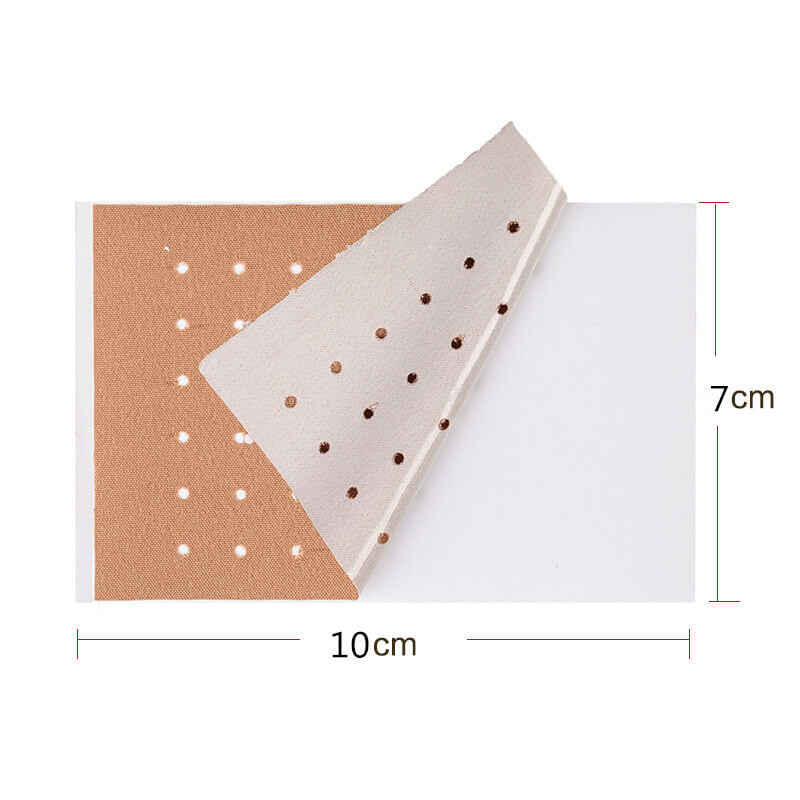
- Patch size: 7cm squared - 40cm squared
- Wear duration: 12 hours - 7 days
- Adhesion strength: 0.5 - 2.0 N/25mm
Phase 3: Prototype Development and Testing (6-10 Weeks)
Once the formulation is optimized, the manufacturing team creates prototype patches for comprehensive testing. This phase validates that the laboratory formulation can be reproducibly manufactured at scale.
Essential Testing Protocols
- In Vitro Release Testing: Measuring drug release rates using Franz diffusion cells
- Skin Permeation Studies: Evaluating drug absorption through excised skin models
- Adhesion Testing: Ensuring patches remain attached for required wear duration
- Content Uniformity: Verifying consistent drug distribution across patch surface
- Moisture Content Analysis: Controlling water activity to prevent degradation
- Accelerated Stability Studies: Predicting shelf life under elevated temperature conditions
Regulatory-Required Tests:
- Drug-excipient compatibility studies
- Package compatibility testing
- Sterility testing (if required for specific markets)
- Endotoxin testing (for certain pharmaceutical applications)
Phase 4: Pilot Production (3-4 Weeks)
Pilot production creates limited batches of patches using full-scale manufacturing equipment. This step bridges the gap between laboratory prototypes and commercial production.
Pilot Batch Objectives
- Validate manufacturing process scalability
- Generate exhibition samples for trade shows and investor presentations
- Conduct long-term stability testing on production-scale samples
- Optimize packaging and labeling for retail or institutional markets
- Train production staff on specific formulation requirements
Typical Pilot Batch Size: 5,000 - 10,000 patches, sufficient for market testing and stability studies.
Phase 5: Scale-Up and Process Validation (4-6 Weeks)
Process validation confirms that the manufacturing process consistently produces patches meeting quality specifications. This phase is mandatory for regulatory approval in most pharmaceutical markets.
Validation Activities
- Installation Qualification (IQ): Verifying equipment installation meets specifications
- Operational Qualification (OQ): Testing equipment performance parameters
- Performance Qualification (PQ): Demonstrating consistent product quality
- Process Capability Studies: Statistical analysis of process stability
- Cleaning Validation: Ensuring equipment cleanliness between product changeovers
Phase 6: Regulatory Submission (2-6 Months)
Regulatory approval timelines vary significantly by target market and product classification. Understanding these requirements is crucial for accurate project planning.
Regulatory Pathways by Market
- United States (FDA): 505(b)(2) NDA or ANDA pathway; 10-18 months review time
- European Union (EMA): Decentralized or Mutual Recognition Procedure; 12-15 months
- China (NMPA): Imported drug registration; 12-24 months depending on classification
- Southeast Asia: National registration; 6-12 months typically
- Middle East: SFDA registration; 6-9 months
Technical Documentation Required:
- Complete formulation and manufacturing process descriptions
- Quality control specifications and test methods
- Stability study data and expiration dating
- Certificate of Analysis (CoA) for all components
- Packaging specifications and artwork proofs
Why Partner with KONGDY Medical for Your Custom Patch Development
Selecting the right OEM transdermal patch manufacturer is the most critical decision in your patch development timeline. KONGDY Medical offers comprehensive services that accelerate your path to market.
1. 35+ Years of Transdermal Expertise
With over three decades of experience in transdermal patch manufacturing, KONGDY Medical has developed and produced patches for pharmaceutical companies, healthcare brands, and private label distributors across 60+ countries. Our deep technical expertise minimizes development risks and accelerates timelines.
2. State-of-the-Art R&D Facilities
Our in-house research and development center features advanced formulation laboratories, permeation testing equipment, and pilot-scale production lines. This vertical integration reduces dependency on external contractors and shortens your overall patch development timeline.
3. Comprehensive Regulatory Support
Navigating regulatory requirements across global markets can be time-consuming. Our dedicated regulatory affairs team provides:
- Product registration documentation preparation
- Technical file compilation for CE/FDA submissions
- Certificate of Free Sale (CFS) issuance
- Compliance consulting for specific market requirements
4. Flexible Manufacturing Minimums
We accommodate projects of all sizes with minimum order quantities starting at just 5,000 pieces. This flexibility allows brands to launch products with manageable initial investments while establishing market presence.
5. Competitive Factory-Direct Pricing
Our vertically integrated manufacturing facility enables us to offer factory-direct pricing without compromising quality. Volume discounts begin at 10,000 pieces, providing significant cost advantages for larger orders.
6. Fast Turnaround and Reliable Delivery
Standard production lead time is 3-4 weeks from order confirmation, with express options available for urgent requirements. Our established logistics network ensures timely delivery to destinations worldwide.
Conclusion
The patch development timeline for custom transdermal patches spans 4-8 months for standard products, with additional time required for regulatory approvals in target markets. Understanding each phase of the custom patch OEM process empowers businesses to plan effectively and avoid common pitfalls that delay market entry.
By partnering with KONGDY Medical, you gain access to industry-leading expertise, cutting-edge formulation capabilities, and a proven supply chain that accelerates your path from concept to commercial success.
Contact KONGDY Medical today for a free consultation and project timeline estimate!
WhatsApp: +86 18939260319
Email: kongdypatch@gmail.com
Website: https://www.kongdymedical.com


