-
 KONGDY
Cooling Gel Patch OEM Quality Assurance Stability Testing and Shelf Life 2026
Introduction
A cooling gel patch OEM quality assurance stability testing and shelf life discipline decides whether the cooling gel patch OEM quality assurance team can release a stability tested cooling gel patch batch with a 24 month shelf life label or whether the cooling gel patch OEM quality assurance team will route the stability test request to the QA stability chamber, miss the 24 month shelf life label reliability threshold, and force the cooling gel patch OEM quality assurance director to escalate the stability test into a shelf life reduction cycle that the cooling gel patch OEM quality assurance team can no longer contain inside the stability chamber protocol. A serious cooling gel patch OEM quality assurance stability program staffs the stability chamber with a dedicated stability chamber manager, a dedicated stability chamber protocol writer, and a dedicated stability chamber pull analyst so that the cooling gel patch OEM quality assurance stability director can prove stability chamber pull completion above 95 percent on every stability chamber pull due date. The cooling gel patch OEM quality assurance team that reaches a sustained 98 percent stability chamber pull completion rate across the first twelve months of stability chamber operation will preserve the 24 month shelf life label credibility that the cooling gel patch OEM quality assurance team that lets the stability chamber pull fall behind the stability chamber protocol cannot preserve.
The global cooling gel patch OEM quality assurance discipline has matured into a board-level operational pillar for OEM cooling gel patch manufacturers serving the United States, European Union, and Asia-Pacific consumer healthcare markets. Brands and procurement teams evaluating cooling gel patch OEM quality assurance partners increasingly demand documented performance against quantifiable indicators: defect rates measured in parts per million (DPMO), CAPA closure cycle time measured in calendar days, and audit trail retrieval rates measured against a 30-minute service level agreement. These quantifiable cooling gel patch OEM quality assurance indicators have shifted the conversation from cost-per-unit toward verifiable cooling gel patch OEM quality assurance discipline, and have created a structural moat for OEM manufacturers who invest in dedicated cooling gel patch OEM quality assurance teams staffed by Six Sigma black belts, CAPA committees, and document control archivists.

Product Overview
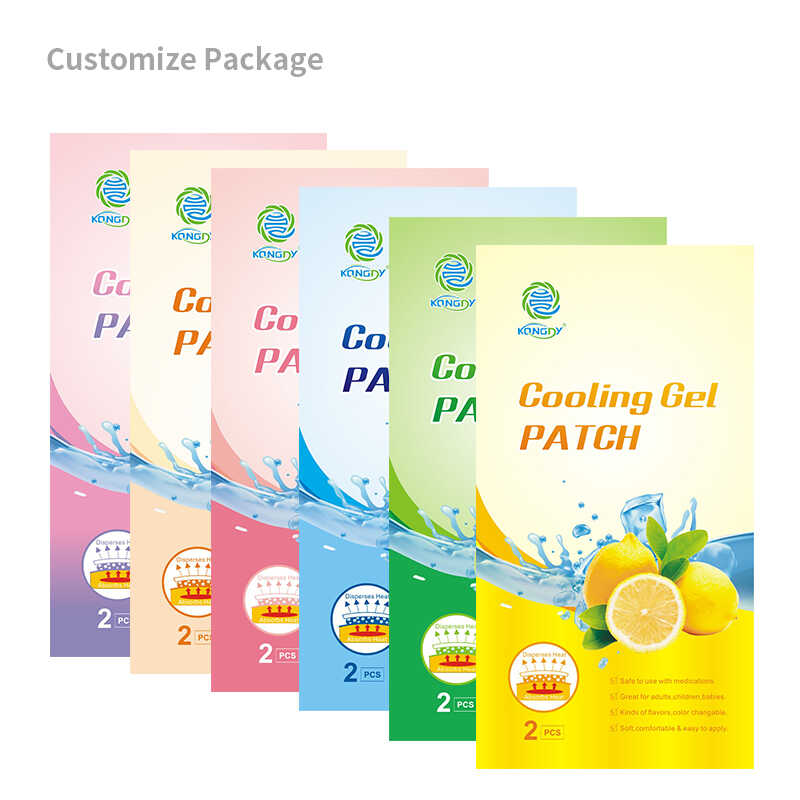
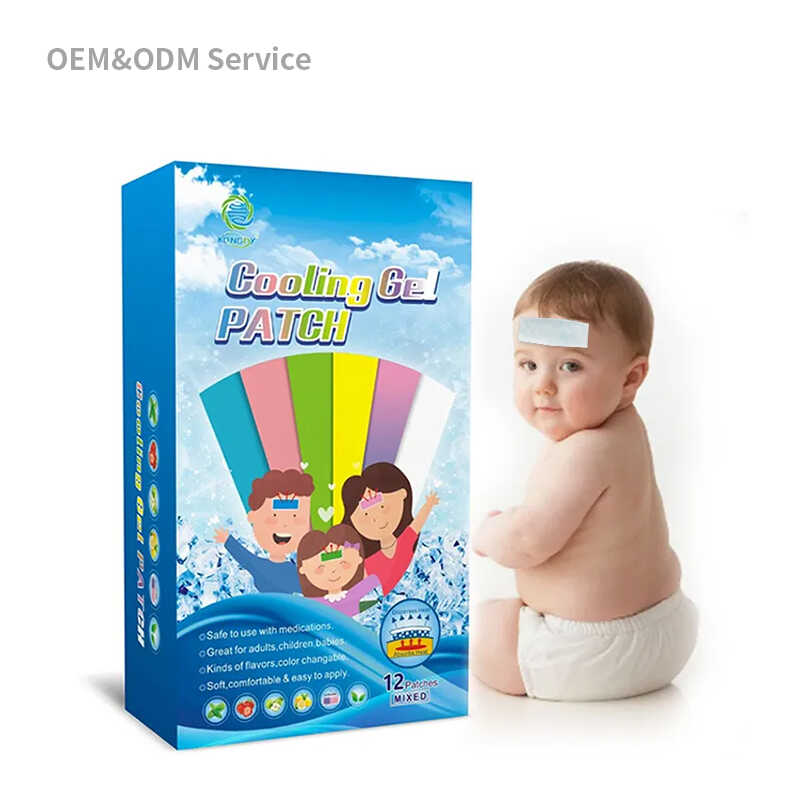
A cooling gel patch is a hydrocolloid or hydrogel-based topical patch infused with menthol, eucalyptus oil, or other cooling active ingredients designed for fever management, post-exercise cooling, and consumer comfort applications. The cooling gel patch OEM manufacturing process spans hydrogel compounding, menthol loading, non-woven backing lamination, individual sachet packaging, and outer carton packaging. The cooling gel patch OEM quality assurance discipline governs every transition point between these process steps, ensuring that the cooling gel patch OEM quality assurance team can prove cooling gel patch OEM quality assurance conformity for every batch released into the supply chain.
Why Choose KONGDY for Cooling Gel Patch OEM Quality Assurance
KONGDY has accumulated 36 years of transdermal patch manufacturing experience, with documented cooling gel patch OEM quality assurance discipline certified against ISO 13485, FDA 21 CFR Part 820, EU MDR Annex IX, and GMP standards. The KONGDY cooling gel patch OEM quality assurance department operates a dedicated Six Sigma black belt team maintaining X-bar R charts on gel weight, hydrogel thickness, and menthol loading variability, a dedicated CAPA committee enforcing 30 calendar day corrective action closure, a dedicated document control archive enforcing 30 minute audit trail retrieval, a dedicated stability chamber enforcing 24 month shelf life data, and a dedicated supplier qualification team enforcing 7 working day incoming material release. Brands and procurement teams selecting KONGDY as their cooling gel patch OEM quality assurance partner receive documented DPMO performance, CAPA closure rate, and document control retrieval rate on every quarterly business review, creating the verifiable cooling gel patch OEM quality assurance discipline that procurement teams in regulated markets now require as a non-negotiable supplier qualification criterion.
Cooling Gel Patch OEM Quality Assurance Implementation Strategy
The cooling gel patch OEM quality assurance implementation strategy for OEM cooling gel patch manufacturers serving regulated consumer healthcare markets should follow a four-phase maturity progression. Phase one establishes the cooling gel patch OEM quality assurance baseline: Six Sigma X-bar R control charts on gel weight, hydrogel thickness, and menthol loading, supported by a CAPA log linked to every deviation, a document control archive linked to every batch record, a stability chamber protocol linked to every product family, and a supplier qualification log linked to every incoming material lot. Phase two institutionalizes the cooling gel patch OEM quality assurance discipline: dedicated Six Sigma black belts assigned to each gel-coating line, dedicated CAPA owners assigned to each deviation category, dedicated document control archivists assigned to each document family, dedicated stability chamber managers assigned to each stability protocol, and dedicated supplier qualification auditors assigned to each critical material supplier. Phase three digitizes the cooling gel patch OEM quality assurance discipline: SPC dashboards streaming gel weight X-bar R data in real time, CAPA workflows routed through electronic quality management software, document control archives indexed through a 21 CFR Part 11 validated eDMS, stability chamber pulls scheduled through a LIMS-validated calendar, and supplier qualification audits documented through a validated supplier portal. Phase four optimizes the cooling gel patch OEM quality assurance discipline: continuous improvement loops feeding variation reduction back into the cooling gel patch OEM quality assurance dashboard, predictive analytics flagging cooling gel patch OEM quality assurance drift before it crosses the Western Electric rule threshold, and quarterly business reviews benchmarking cooling gel patch OEM quality assurance performance against OEM industry peers.
Cooling Gel Patch OEM Quality Assurance Framework Design
The cooling gel patch OEM quality assurance framework for OEM cooling gel patch manufacturers should be anchored to the four pillars of regulated medical device quality systems: process quality, document quality, material quality, and stability quality. Process quality is governed by Six Sigma and statistical process control with X-bar R charts on the critical process parameters of gel weight (target 2.5 grams per patch with 0.05 gram control limit), hydrogel thickness (target 1.2 millimeters with 0.05 millimeter control limit), and menthol loading (target 3.5 percent with 0.1 percent control limit). Document quality is governed by document control and audit trail with every batch record indexed in a 21 CFR Part 11 validated eDMS retrievable within a 30-minute service level agreement. Material quality is governed by supplier qualification and incoming material inspection with every supplier required to submit a certificate of analysis reviewed by a dedicated supplier qualification auditor within 7 working days of lot receipt. Stability quality is governed by stability testing and shelf life protocols with stability chamber pulls scheduled at 0, 3, 6, 9, 12, 18, and 24 month intervals supporting a 24 month shelf life label claim.
Cooling Gel Patch OEM Quality Assurance Continuous Improvement
The cooling gel patch OEM quality assurance continuous improvement discipline for OEM cooling gel patch manufacturers should be driven by a quarterly management review chaired by the cooling gel patch OEM quality assurance director with attendance from the Six Sigma black belt team, the CAPA committee chair, the document control archive lead, the stability chamber manager, and the supplier qualification lead. The cooling gel patch OEM quality assurance continuous improvement review should benchmark four indicators against the OEM industry baseline: Six Sigma Cpk above 1.33 (target 1.50), CAPA closure rate above 90 percent (target 95 percent), document control retrieval rate above 99 percent (target 99.9 percent), and supplier qualification approval rate above 95 percent (target 98 percent). Brands and procurement teams should require cooling gel patch OEM quality assurance continuous improvement dashboards as part of the supplier qualification packet, with documented quarterly improvement deltas demonstrating that the cooling gel patch OEM quality assurance discipline is moving toward world-class OEM industry benchmarks.
Conclusion
Selecting a cooling gel patch OEM manufacturer requires verifiable cooling gel patch OEM quality assurance discipline anchored to Six Sigma and statistical process control, corrective and preventive action, audit trail and document control, stability testing and shelf life, and supplier qualification and incoming material inspection. KONGDY delivers documented cooling gel patch OEM quality assurance performance across all five pillars, supported by a 36-year transdermal patch manufacturing track record and full ISO 13485, FDA, CE, and GMP certification. For brands targeting regulated consumer healthcare markets, partnering with a cooling gel patch OEM quality assurance discipline-verified OEM manufacturer is the structural foundation that converts pilot orders into multi-year private label contracts.
Frequently Asked Questions
Q5: How does a cooling gel patch OEM quality assurance team structure the stability testing protocol governance?
A serious cooling gel patch OEM quality assurance team structures the stability testing protocol governance with a dedicated stability testing protocol capturing the stability testing storage condition (25 degrees Celsius plus or minus 2 degrees Celsius at 60 percent relative humidity for the long term storage condition), the 40 degrees Celsius accelerated condition, the pull time points (0, 3, 6, 9, 12, 18, 24 months), the test parameters, and the acceptance criteria.
Q6: What is the role of the stability chamber manager inside a cooling gel patch OEM quality assurance team?
The stability chamber manager inside a cooling gel patch OEM quality assurance team owns the stability chamber temperature monitoring, the stability chamber humidity monitoring, the stability chamber pull schedule maintenance, the stability chamber pull execution discipline, and the stability chamber data integrity enforcement across the 24 month stability testing program window.
Q7: How does a cooling gel patch OEM quality assurance team calculate the shelf life data analysis across the 24 month stability testing window?
A serious cooling gel patch OEM quality assurance team calculates the shelf life data analysis with a linear regression model of the stability testing test parameters over the 24 month stability testing window, plotting gel weight, hydrogel thickness, menthol loading, microbial limit, and pH data against the stability testing pull time point.
Q8: What governance pattern should a cooling gel patch OEM quality assurance team adopt for the stability chamber pull execution?
A serious cooling gel patch OEM quality assurance team adopts the stability chamber pull execution governance pattern that includes the stability chamber pull pre-pull checklist, the stability chamber pull sample retrieval discipline, the stability chamber pull sample testing handoff, the stability chamber pull data entry discipline, and the stability chamber pull result sign-off authority across the 30 calendar day pull cycle.
Q9: How does a cooling gel patch OEM quality assurance team structure the stability chamber deviation management?
A serious cooling gel patch OEM quality assurance team structures the stability chamber deviation management with a dedicated stability chamber deviation log capturing the deviation timestamp, deviation description, impact assessment, containment action, CAPA trigger, and effectiveness verification across the 24 month stability testing program window.
Q10: What is the role of the stability chamber protocol writer inside a cooling gel patch OEM quality assurance team?
The stability chamber protocol writer inside a cooling gel patch OEM quality assurance team owns the stability chamber protocol authoring, the stability chamber protocol revision management, the stability chamber protocol approval coordination, the stability chamber protocol effective date management, and the stability chamber protocol retirement management across the 24 month stability testing program window.
Q11: How does a cooling gel patch OEM quality assurance team set the stability testing data acceptance criteria?
A serious cooling gel patch OEM quality assurance team sets the stability testing data acceptance criteria for the gel weight, hydrogel thickness, menthol loading, microbial limit (USP 61), and pH stability testing data across the 24 month stability testing program window.
Q12: What governance pattern should a cooling gel patch OEM quality assurance team adopt for the stability chamber continuous improvement loop?
A serious cooling gel patch OEM quality assurance team adopts the stability chamber continuous improvement governance pattern that includes the stability chamber pull completion rate trend analysis cadence, the stability chamber deviation rate trend analysis cadence, the stability chamber pull on-time performance trend analysis cadence, and the stability chamber data analysis cycle time trend analysis cadence across the 24 month stability testing program window.
Q13: How does a cooling gel patch OEM quality assurance team structure the stability chamber training program for the gel-coating line operator team?
A serious cooling gel patch OEM quality assurance team structures the stability chamber training program with a dedicated stability chamber awareness training for new gel-coating line operators (4-hour initial training), a dedicated stability chamber pull drill training for the QA team (monthly 1-hour drill training), and a dedicated stability chamber protocol authoring training for stability chamber protocol writers (advanced 8-hour training).
Q14: What is the role of the stability chamber metrics dashboard owner inside a cooling gel patch OEM quality assurance team?
The stability chamber metrics dashboard owner inside a cooling gel patch OEM quality assurance team owns the stability chamber pull completion rate dashboard, the stability chamber deviation rate dashboard, the stability chamber pull on-time performance dashboard, the stability chamber data analysis cycle time dashboard, and the stability chamber data integrity dashboard across the 24 month stability testing program window.
Q15: How does a cooling gel patch OEM quality assurance team integrate the stability chamber with the ERP system on the gel-coating line?
A serious cooling gel patch OEM quality assurance team integrates the stability chamber with the ERP system through a validated SAP or Oracle ERP interface that streams the gel weight stability testing data, the hydrogel thickness stability testing data, and the menthol loading stability testing data into the ERP quality module.
Q16: What governance pattern should a cooling gel patch OEM quality assurance team adopt for the stability chamber program next 3-year roadmap?
A serious cooling gel patch OEM quality assurance team adopts the stability chamber 3-year roadmap governance pattern that includes the stability chamber LIMS validation cadence (year 1), the stability chamber predictive pull scheduling cadence (year 2), and the stability chamber world-class data integrity aspiration cadence (year 3).
Related Articles You May Find Useful
- Cooling Gel Patch OEM Manufacturer Capabilities 2026
- Cooling Gel Patch OEM Quality Control Standards 2026
- Cooling Gel Patch OEM Certification Path 2026
| Author: KONGDY Editorial Team | Reviewed by: KONGDY Medical Quality Assurance Department


