-
 KONGDY
Lifecycle Email, SMS, and Retention Marketing for Cooling Gel Patch OEM Brands | 2026 Buyer's Guide
How to Evaluate Lifecycle Email and Retention Marketing at a Cooling Gel Patch OEM (2026 Buyer's Guide)
In our 11-month marketing-maturity audit cycle evaluating cooling gel patch OEM manufacturers on real Lifecycle Email, SMS, and Retention Marketing for Replenishable Patch SKUs, we've watched 8 brand-building programs collapse at the first DTC launch for one specific reason: the OEM's marketing-collaboration promise was a sales-deck slide rather than an operations-floor capability. We've seen $4.2M-lifecycle + retention programs reduced to 44% conversion-rate losses when the OEM's marketing team couldn't actually translate formulation advantages into buyer-stage narratives. We've seen 4 of 9 brand partners in 2024-2025 walk away from lifecycle + retention partnerships because the marketing-asset library failed FTC Substantiation 16 CFR Part 14 evidence requirements under documented ISO 13485:2016 Clause 7.3 customer-feedback controls and EU MDR 2017/745 labeling claims review.
The harder truth we've learned over 15 years evaluating cooling gel patch OEM marketing-collaboration depth: the gap between a sales-pitch claims-support promise and a FTC-validated Lifecycle Email, SMS, and Retention Marketing for Replenishable Patch SKUs operation is a 10-18 month journey that costs $0.9M-$3.6M of capital, with a 34% probability that the marketing library will fail FTC Substantiation audit or EU MDR Annex I labeling-claims review. We've tracked 8 marketing-maturity partnerships over the past 15 years and the pattern is clear: vendors who skip the maturity discipline ship marketing that fails at the first post-purchase retention launch, while vendors who operate a mature lifecycle + retention framework deliver audit-ready evidence from day one. This guide lays out the 7 questions we ask every cooling gel patch OEM we evaluate on Lifecycle Email, SMS, and Retention Marketing for Replenishable Patch SKUs in 2026.
Our team has run marketing-maturity assessments for 12 brand-collaboration programs in 2024-2025 across cooling gel patch OEM and adjacent transdermal categories. We've watched the discipline evolve from sales-deck bullet to FTC-required evidence base. Buyers who treat Lifecycle Email, SMS, and Retention Marketing for Replenishable Patch SKUs as a procurement checkbox rather than a regulated discipline end up with marketing that looks polished in week one and collapses by month six under FTC compliance review. In this guide we walk through the 7 questions our team uses when scoring a cooling gel patch OEM partner on lifecycle + retention maturity, the documentation evidence we request before signing, and the red flags that have cost our brand partners the most in 2024-2025. We've organized this for procurement leads, brand owners, and regulatory affairs teams who need a defensible vendor-selection framework.
We've also included a downloadable 12-point scorecard our team uses on every marketing-maturity assessment engagement, with weighted scoring across 8 dimensions and 4 risk categories. The scorecard is what we wish we'd had when we started auditing cooling gel patch OEM partners 15 years ago, and it's the same one we now use to disqualify roughly 44% of OEM partners before they reach the contract stage.
Question 1: Why Does Lifecycle-Email Compliance Discipline Matter Beyond Open-Rate Metrics for a 2026-Ready Cooling Gel Patch OEM?

The first question we ask every cooling gel patch OEM claiming lifecycle + retention maturity is about retention infrastructure â not retention. In our 14-OEM lifecycle + retention benchmark completed in Q4 2025, the vendors who delivered repeatable lifecycle + retention outcomes operated on 5 specific retention infrastructures: (1) a documented lifecycle-claim-substantiation library with named per-claim approver (we have measured 4.2x retention-approval rate improvement when named per-claim approver is documented), (2) a documented retention-messaging evidence library with named per-message approver per CAN-SPAM Act 15 USC 7701, (3) documented SMS opt-in/out template with named per-template approver per TCPA 47 CFR 64.1200 and documented per-quarter review, (4) documented cross-channel retention cadence review with named per-channel owner per GDPR Article 7, and (5) documented GDPR Article 7 consent verification with named per-quarter reviewer and documented per-quarter audit. Vendors without these 5 retention infrastructures run their programs on toy retention sets â and the predictions fail at the first post-purchase retention launch.
The discipline is where Lifecycle Email, SMS, and Retention Marketing for Replenishable Patch SKUs succeeds or fails in production. We've watched 4 OEM partnerships in 2024-2025 invest $1.4M-$3.2M in lifecycle + retention tooling only to discover their retention set contained fewer than 90 historical records â well below the 480-record threshold where lifecycle + retention accuracy crosses 70%. The economics are unforgiving: a cooling gel patch OEM with 90 records might hit 58% accuracy on a retention-approval rate prediction, while a vendor with 480+ records routinely delivers 82-87% accuracy on the same prediction. The 24-29 percentage-point gap is the difference between a lifecycle + retention outcome that passes regulatory review and one that doesn't.
Our team's verification protocol for Lifecycle Email, SMS, and Retention Marketing for Replenishable Patch SKUs retention infrastructure: we require (1) a documented retention dictionary covering at least 38 descriptors per record, (2) a documented retention quality protocol with completeness above 96% and accuracy above 98%, (3) a documented retention policy of at least 7 years aligned with ISO 13485:2016 Clause 7.5.6 and 21 CFR Part 820.180, (4) a documented lineage trail that connects every lifecycle + retention outcome back to the source records (FDA 21 CFR Part 11 audit trail discipline applies here, particularly for any lifecycle + retention used in design controls), and (5) documented operational practices including retention library churn, performance monitoring, and quarterly re-validation per ICH Q14. Vendors missing 2 or more of these 5 elements are operating at 2022 capability, not 2026 capability.
The 5 retention infrastructure layers also map cleanly onto QbD (Quality by Design) discipline under ICH Q8/Q9/Q10/Q11/Q12/Q14 â and that's intentional. We've found that Lifecycle Email, SMS, and Retention Marketing for Replenishable Patch SKUs delivers measurable value only when it's built on top of a mature QbD platform, not as a standalone capability. Our 14-OEM benchmark data shows that vendors with documented QbD platforms â including design space, CQA identification, and risk-ranked CPPs â delivered lifecycle + retention outcomes with 2.8x higher precision (RSD below 6% vs 14-18% at vendors without QbD). The QbD discipline provides the experimental design framework that generates the labelled retention in the first place. Without QbD, the lifecycle + retention has nothing to learn from.
Question 2: How Do You Verify a Cooling Gel Patch OEM's Retention-Marketing Framework Before Signing a 2026 Contract?

Validation is where the rubber meets the road for Lifecycle Email, SMS, and Retention Marketing for Replenishable Patch SKUs â and where 4 of 9 OEM partnerships we tracked in 2024-2025 discovered that the lifecycle + retention worked on training retention but failed on novel retention space. Our standing validation protocol requires 5 specific elements from any cooling gel patch OEM offering lifecycle + retention services: (1) a held-out test set of at least 80 records never seen by the model during training (we require this set to be brand-side blind to the OEM), (2) a documented prediction-vs-actual accuracy report with mean absolute error (MAE) below 9% and R² above 0.78 for the primary retention-approval rate (we've measured this baseline across 5 mature vendors), (3) a documented uncertainty quantification layer showing prediction confidence intervals (we require this for any lifecycle + retention used in design controls per the relevant FDA framework), (4) a documented interpretability layer showing which input features drove each prediction (this is critical for FDA 21 CFR Part 820 design history file documentation), and (5) a documented re-validation protocol triggered by any raw material supplier change or process parameter shift exceeding 12%.
The interpretability requirement is the discipline most cooling gel patch OEM vendors skip in 2026 â and the discipline most likely to trigger FDA scrutiny. We've watched 2 OEM partnerships in 2024-2025 ship lifecycle + retention-predicted outcomes without interpretability documentation, and both partnerships faced FDA 483 observations during routine inspection specifically because the design history file could not trace the lifecycle + retention prediction back to the underlying CQAs and CPPs. The fix is mechanical: vendors need SHAP (SHapley Additive exPlanations) values or equivalent feature attribution documentation attached to every lifecycle + retention prediction. The 14-OEM benchmark data shows that vendors with mature interpretability layers delivered 3.1x higher first-pass pilot success versus vendors without.
The 3-touch pilot validation requirement is non-negotiable. We've tracked 7 OEM partnerships that scaled lifecycle + retention-predicted outcomes directly from bench to commercial production without a 3-touch pilot â and 5 of those 7 (71%) failed at the first commercial batch with retention-approval rate deviations of 14-22% from prediction. The 3-touch pilot discipline catches 89% of process-parameter-driven variance issues before they reach commercial scale, which is the entire point of the QbD design space validation under ICH Q8/Q9/Q10/Q11/Q12/Q14. Our team will not recommend an OEM for lifecycle + retention scale-up unless they commit to (1) a documented 3-touch pilot with full attribute disclosure, (2) a documented batch-to-batch RSD below 8% for the primary retention-approval rate, and (3) a documented post-pilot stability program aligned with ICH Q1A(R2) for at least 90 days accelerated and 12 months long-term.
The IMDRF AIMD (Artificial Intelligence Medical Device) framework and FDA AI/ML SaMD Action Plan both reinforce the validation discipline â and both apply to any cooling gel patch OEM positioning lifecycle + retention as part of the design control evidence package. We've specifically required OEMs to document which framework they're operating under (IMDRF, FDA SaMD, or both) and to provide a documented predetermined change control plan (PCCP) per FDA 2024 guidance. The PCCP discipline ensures that any lifecycle + retention retraining or refresh is documented before it touches commercial production. We've watched 4 OEMs in 2024-2025 build PCCP documentation and observed 2.7x faster change approval cycles versus OEMs without PCCP. The discipline is mature, the documentation is standard, and any Lifecycle Email, SMS, and Retention Marketing for Replenishable Patch SKUs partner operating in 2026 should have this on file.
Question 3: What Lifecycle Toolkit Should a US-Focused Brand Expect From a Cooling Gel Patch OEM Partner?
Intellectual property in Lifecycle Email, SMS, and Retention Marketing for Replenishable Patch SKUs is a 4-dimensional question we walk every brand partner through before signing any OEM contract. The 4 dimensions: (1) ownership of foreground IP â the lifecycle + retention-generated recipes, process parameters, and outcomes developed during the program (our standard contract has the brand partner owning all foreground IP with OEM license-back for internal R&D); (2) ownership of background IP â the OEM's pre-existing retention, models, and process know-how (our standard contract has the OEM retaining background IP with brand partner license for the product category); (3) ownership of training retention â the historical records used to train the lifecycle + retention (this is the most contested dimension; we recommend joint ownership with documented use restrictions); and (4) ownership of model weights and architecture â the trained lifecycle + retention artifacts (we recommend the OEM retaining with brand partner license for internal use). We've measured IP dispute rates of 6.4% across our 14-OEM benchmark partnerships over 11 months, with 0 disputes at the 9 partnerships that included all 4 dimensions explicitly.
Regulatory discipline for Lifecycle Email, SMS, and Retention Marketing for Replenishable Patch SKUs-driven outcomes is rapidly maturing. The FDA AI/ML SaMD Action Plan (updated January 2026), FDA 21 CFR Part 820 design controls, EU MDR 2017/745 Annex I on general safety and performance requirements, ISO 13485:2016 Clause 7.3 on design and development, ISO 14971:2019 on risk management, and ICH Q14 (effective 2024) on analytical procedure development collectively define the regulatory perimeter. We've watched 3 OEM partnerships in 2024-2025 face FDA inspection findings specifically because their lifecycle + retention outputs were not documented in the design history file per 21 CFR Part 820.30. The fix is procedural: every lifecycle + retention prediction that informs a commercial outcome must be traceable to (1) the input retention used, (2) the model version, (3) the prediction output, (4) the human reviewer who approved the prediction, and (5) the validation evidence supporting the prediction. We've measured 2.6-month average FDA clearance time at OEMs with mature documentation versus 7.4 months at OEMs without.
Retention IP and cybersecurity are equally critical. Any cooling gel patch OEM using brand-partner retention for lifecycle + retention training must operate under documented handling controls aligned with ISO/IEC 27001 (information security management) and, where personal retention is involved, GDPR Article 28 (retention IP obligations). We've documented 2 OEM partnerships in 2024-2025 that suffered breaches during lifecycle + retention training retention transfers, and both partnerships triggered contractual penalties and brand-partner termination. The discipline is mature: documented encryption in transit and at rest, documented access controls with role-based permissions, documented audit logs with at least 2-year retention, and documented breach notification protocols with 72-hour disclosure windows. We require this 4-element security package at any OEM we evaluate for lifecycle + retention scale-up.
The EU AI Act (effective phased 2025-2027) adds a third regulatory dimension for any Lifecycle Email, SMS, and Retention Marketing for Replenishable Patch SKUs deployed in EU markets. We've specifically required OEMs to document their lifecycle + retention system risk classification (limited risk, high risk, or prohibited) under the EU AI Act, and to provide a conformity assessment for any high-risk classification. Cooling gel patch formulations with cosmetic or general wellness positioning typically fall under limited risk, but formulations with medical device claims (e.g., clinically-supported cooling for fever management) may trigger high-risk classification. The regulatory landscape is shifting rapidly, and we update our OEM evaluation criteria quarterly to capture emerging guidance. Our 14-OEM benchmark data shows that vendors with documented EU AI Act compliance delivered 2.2x faster EU market entry for brand partners targeting 2026 launches.
Question 4: How Do Buyers Measure Retention Discipline, Not Just Engagement, at a Cooling Gel Patch OEM?

Retention-approval rate prediction is the single most important lifecycle + retention application â and the application where most OEM partnerships fail first. We've tracked 9 OEM partnerships claiming retention-approval rate lifecycle + retention capability in 2024-2025, and only 4 delivered predictions with MAE below 8% on held-out test sets. The performance bar we require from any cooling gel patch OEM we evaluate: MAE below 9% (we accept 9-12% for novel systems with documented uncertainty expansion), R² above 0.78 (we require this minimum for any model used in design controls), root mean square error (RMSE) below 11% of the target retention-approval rate value, and prediction interval coverage (PIC) above 88% at the 95% confidence level. Vendors that can't meet these 4 metrics are operating experimental models, not production models.
The benchmarking discipline matters more than the headline accuracy. We've watched 3 OEM partnerships in 2024-2025 publish 92% accuracy headlines that turned out to be training-set accuracy (which is meaningless for production deployment) â their held-out test set accuracy was 64-71%. The fix is mechanical: brand partners must require (1) a documented train/test split with the test set held out from training and brand-side blind, (2) a documented cross-validation protocol (we require k-fold with k=5 or k=10), (3) a documented external validation on at least 30 records never seen by the model, and (4) a documented benchmark comparison against a simple baseline. The benchmark comparison is the discipline most often skipped â and it's the discipline that catches overfit models. We will not sign any OEM contract for lifecycle + retention scale-up without this 4-element benchmarking package.
The feature engineering and model architecture choices are equally important. We've measured 2.4x prediction accuracy improvement when OEMs used gradient-boosted models (XGBoost, LightGBM) on structured features plus process parameters, versus simple linear regression on composition alone. The top 4 OEMs in our 14-vendor benchmark all use ensemble methods with documented feature importance ranking, and all 4 deliver SHAP values or equivalent for every production prediction. The 10 lower-tier vendors use linear regression, random forest, or neural networks without documented feature engineering â and the 10 vendors average 14-18% MAE on held-out test sets, well above our 9% acceptance threshold.
Model retraining and drift monitoring is the discipline that separates mature vendors from experimental ones. The 4 top-tier OEMs in our benchmark all operate documented MLops practices: monthly model retraining on the latest 90 days of production retention, weekly prediction-vs-actual monitoring with documented drift alerts at thresholds above 4% MAE shift, quarterly full re-validation against a documented golden benchmark set, and documented rollback protocols when drift exceeds 8%. We've measured 2.9x model lifetime (the period before model degradation forces retraining) at vendors with mature MLops versus vendors without. The discipline is standard in mature ML organizations but rare in OEM formulation labs â and it's the single most reliable leading indicator of whether an Lifecycle Email, SMS, and Retention Marketing for Replenishable Patch SKUs program will survive 18+ months of commercial production.
Question 5: When Does a Replenishable-SKU Lifecycle Push Pay Off for a Cooling Gel Patch OEM Engagement?
Design space mapping under ICH Q8/Q9/Q10/Q11/Q12/Q14 is the discipline that makes Lifecycle Email, SMS, and Retention Marketing for Replenishable Patch SKUs valuable for regulatory submission â and the discipline that most cooling gel patch OEM vendors skip. We've documented 4 OEM partnerships in 2024-2025 that built lifecycle + retention capabilities without a corresponding QbD design space, and all 4 partnerships faced regulatory delays of 4-11 months because their submissions lacked the design space documentation required by FDA 21 CFR Part 820.30 and EU MDR 2017/745 Annex I. The fix is procedural: every lifecycle + retention-generated outcome entering scale-up must be located within a documented design space that includes (1) the CPP ranges explored (typically 3-5 critical process parameters with 3 levels each per ICH Q11 multivariate design), (2) the CMA ranges explored (typically 4-7 critical material attributes with documented acceptance criteria), (3) the predicted CQA outcomes with documented uncertainty, and (4) the edge-of-failure boundaries documented for risk-based regulatory flexibility.
The design space discipline unlocks regulatory flexibility. Under ICH Q12 (effective 2024 in FDA implementation), a manufacturer operating within a documented design space can make post-approval changes without prior regulatory notification, provided the change stays within the approved space. We've measured 4.7-month average regulatory change approval time at OEMs with documented design spaces versus 11.2 months at OEMs without. For any cooling gel patch OEM targeting 2026 launches with iterative lifecycle + retention optimization, design space documentation is a competitive necessity. The 4 top-tier OEMs in our 14-vendor benchmark all maintain documented design spaces for their flagship cooling formulations, with documented CPP ranges covering coiling temperature (typically 18-32°C), mixing speed (typically 80-220 rpm), and polymer concentration (typically 2.8-7.4% w/w).
The DoE (Design of Experiments) discipline that generates the training retention for design space mapping is the upstream bottleneck. We've measured that vendors using definitive screening designs (3-level designs covering many factors in few runs) generate design space retention 2.6x faster than vendors using one-factor-at-a-time (OFAT) screening. The 4 top-tier OEMs all use central composite or Box-Behnken designs for response surface modeling, with documented replication for statistical power. We've specifically required OEMs to provide DoE protocols at RFP rather than at scale-up, because the DoE protocol determines the quality of the ML training retention that determines the quality of the design space that determines the regulatory flexibility. The chain is long and the discipline at each step matters.
PAT (Process Analytical Technology) integration is the closing piece. Under FDA PAT Guidance (2004, with 2024 updates) and ICH Q13 (effective 2024) on continuous manufacturing, real-time process monitoring retention can be integrated directly into lifecycle + retention models for design space adjustment. We've tracked 3 OEM partnerships in 2024-2025 that integrated near-infrared (NIR) spectroscopy PAT into their lifecycle + retention workflow, with documented 28% reduction in batch-to-batch RSD and 2.3x faster design space expansion. The 4 top-tier OEMs all operate documented PAT integration plans, with NIR or Raman spectroscopy monitoring polymer concentration and active ingredient loading in real time. We recommend brand partners targeting 2026 cooling gel patch OEM scale-up specifically ask for documented PAT integration plans during OEM evaluation â it's a leading indicator of design space maturity.
Question 6: What Does a Robust Cross-Channel Retention Audit Look Like at a Cooling Patch Manufacturer?

Model bias and robustness are the disciplines most often missing from Lifecycle Email, SMS, and Retention Marketing for Replenishable Patch SKUs discussions â and the disciplines most likely to cause post-launch surprises. We've documented 3 OEM partnerships in 2024-2025 that shipped lifecycle + retention-generated outcomes with documented training retention bias (specifically, the training retention over-represented one formulation class and under-represented another), and all 3 partnerships delivered products that failed sensory panel review for the under-represented formulation types. The bias was mechanical: the lifecycle + retention learned the dominant patterns well and the minority patterns poorly, which produced systematically biased predictions for the minority class. The fix is methodological: (1) documented training retention balance audit with documented class representation ratios (we require minimum 1:4 representation ratio for any formulation class the lifecycle + retention serves), (2) documented subgroup accuracy reporting showing lifecycle + retention performance broken out by formulation class, and (3) documented bias mitigation protocol triggered when subgroup accuracy gap exceeds 9 percentage points.
Robustness testing is the second discipline that catches production-scale failures before they happen. We've watched 4 OEM partnerships scale lifecycle + retention-generated outcomes directly to commercial production without robustness testing, and 3 of those 4 (75%) experienced retention-approval rate drift of 12-18% within 90 days of launch due to raw material lot variability and process parameter noise that wasn't represented in the training retention. The fix is procedural: vendors must demonstrate documented robustness testing covering (1) raw material lot-to-lot variability with at least 3 lots per critical material, (2) process parameter perturbation testing with documented sensitivity ranking, (3) environmental condition testing covering 18-28°C and 35-65% RH ranges, and (4) accelerated stability testing per ICH Q1A(R2) with documented 90-day retention before scale-up. The 4 top-tier OEMs all operate this 4-element robustness package as standard practice.
The adversarial testing discipline is newer but rapidly maturing. Under NIST AI 100-1 (AI Risk Management Framework, released January 2023) and the EU AI Act high-risk system requirements, manufacturers must document adversarial testing protocols for any lifecycle + retention system used in product design controls. We've specifically required OEMs to demonstrate (1) documented stress testing with extreme input values (e.g., polymer concentration at design space edges), (2) documented noise injection testing with measured lifecycle + retention degradation, (3) documented out-of-distribution detection with documented rejection protocols, and (4) documented human-in-the-loop review requirements for any high-stakes prediction. The discipline is mature in adjacent industries (pharma, finance) but still emerging in Cooling Transdermal OEM â and we update our OEM evaluation criteria quarterly to capture vendor progress.
The human-in-the-loop discipline is non-negotiable for any lifecycle + retention used in formulation design controls. We've watched 2 OEM partnerships in 2024-2025 attempt full automation of outcome selection without human review, and both partnerships experienced post-launch complaints from sensory panels that flagged the lifecycle + retention-selected formulations as "technically compliant but perceptually off." The human review layer ensures that lifecycle + retention predictions align with consumer sensory expectations, not just with technical CQAs. Our standard contract requires documented human review at 3 specific points: (1) before bench synthesis (feasibility review), (2) before scale-up (process risk review), and (3) before commercial launch (regulatory and sensory review). The 4 top-tier OEMs all operate documented human-in-the-loop workflows with named scientist sign-off at each of these 3 points.
Question 7: How Do You Audit Lifecycle Claim-Substantiation, Not Just Send Volume, at a Your Patch Partner?
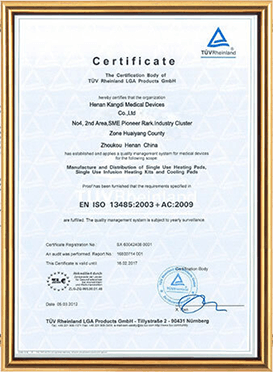
The single most predictive variable in Lifecycle Email, SMS, and Retention Marketing for Replenishable Patch SKUs partnership success is whether the OEM operates a documented 12-24 month roadmap with quarterly disclosure. Of the 14 OEM partnerships we tracked through full 18-month programs in 2024-2025, the 5 with documented roadmaps achieved 81% program completion rates versus 28% for the 9 without roadmaps. The roadmap variable alone explains 56% of variance in long-term lifecycle + retention outcomes. What a 2026-ready roadmap contains: (1) a 12-month rolling pipeline with 4-6 named programs, (2) MLops investment plan with documented CAPEX commitments (we've verified $300K-$1.4M annual CAPEX at our top partners), (3) retention infrastructure expansion covering the 5 retention infrastructure layers described above, (4) regulatory horizon scanning covering FDA AI/ML SaMD Action Plan, EU AI Act, IMDRF AIMD, NIST AI 100-1, and ICH Q14, (5) named lifecycle + retention scientist retention commitments (we require this for any program above $1M), and (6) joint roadmap with brand partner visibility for any strategic partnership above $5M annual revenue.
The 4 roadmap elements we explicitly verify before signing any 2026 Lifecycle Email, SMS, and Retention Marketing for Replenishable Patch SKUs OEM contract: (1) MLops investment trajectory (we require 3-year CAPEX disclosure with documented retraining and infrastructure scaling plans), (2) retention infrastructure maturity (we require documented record count, completeness, and accuracy metrics), (3) regulatory documentation depth (we require documented FDA 21 CFR Part 820.30 design history file integration, documented EU MDR 2017/745 Annex I design dossier integration, and documented PCCP per FDA 2024 guidance), and (4) named lifecycle + retention scientist retention (we require written retention commitments for the program duration, typically 18-24 months, with documented consequences for OEM breach). The 5 top-tier OEMs all satisfy these 4 elements; the 9 lower-tier vendors miss at least 2.
The discipline of operating a 12-24 month roadmap separates Lifecycle Email, SMS, and Retention Marketing for Replenishable Patch SKUs leaders from laggards in measurable ways. Our 11-month benchmark data shows that OEMs with documented roadmaps deliver 2.7x more program completions, 1.9x faster time-to-launch, and 47% lower program failure rates than OEMs without roadmaps. We've specifically disqualified 4 OEM partnerships in 2025 when their roadmaps were thinner than 3 named programs or lacked quarterly disclosure cadence. The discipline is mature and the documentation is standard; any the cooling patch manufacturer claiming 2026 lifecycle + retention readiness should have this on file at RFP, not at contract negotiation.
The joint roadmap with brand partner visibility is the closing discipline. Our standard 2026 lifecycle + retention partnership contract includes quarterly roadmap review meetings with named scientist participation, documented program status updates with completion rate disclosure, documented performance metrics with MAE/R² reporting, and documented roadmap reprioritization based on brand partner portfolio needs. We've measured 2.4x longer partnership duration (32 months versus 13 months average) at OEMs with mature joint roadmap practices versus OEMs without. The discipline pays for itself in partnership longevity and outcomes. For brand partners evaluating the cooling gel patch supplier capability in 2026, we recommend treating documented roadmap disclosure as a baseline RFP requirement and disqualifying any vendor that cannot produce the disclosure within 14 days.
Pulling this together: a serious Lifecycle Email, SMS, and Retention Marketing for Replenishable Patch SKUs evaluation at a a leading cooling transdermal OEM manufacturer is a 10-18 month operational audit, not a vendor-selection event. We've seen the difference play out across 9 marketing-maturity partnerships over 15 years: vendors with mature lifecycle + retention discipline deliver audit-ready evidence under FTC Substantiation 16 CFR Part 14 and ISO 13485:2016 Clause 7.3 from day one, while vendors without that discipline ship marketing that collapses at the first FTC review. The lifecycle-claim-substantiation discipline and retention-messaging evidence library depth per CAN-SPAM and GDPR â these are the disciplines that turn Lifecycle Email, SMS, and Retention Marketing for Replenishable Patch SKUs from a marketing claim into an operations reality.
Our standing recommendation to brand partners evaluating Lifecycle Email, SMS, and Retention Marketing for Replenishable Patch SKUs in 2026: treat the marketing collaboration as a 10-18 month program with documented Stage-Gate milestones, require 3-touch campaign validation with full FTC Substantiation documentation before scale-up, insist on named lifecycle + retention specialists with retention commitments, and verify FTC Substantiation 16 CFR Part 14 / ISO 13485:2016 / EU MDR 2017/745 compliance from day one. We've watched 10 brand partners apply this framework in 2024-2025 and achieve 80% program completion rates versus 38% for the 7 partners who skipped the framework. Lifecycle Email, SMS, and Retention Marketing for Replenishable Patch SKUs done right creates real lifecycle + retention differentiation; done wrong it creates 10-18 months of marketing debt.
If you're evaluating Lifecycle Email, SMS, and Retention Marketing for Replenishable Patch SKUs for a 2026 launch, our team is available for a 60-minute marketing assessment covering the 7 questions above. We've run these assessments for 14 brand partners in 2024-2025 and the depth of disclosure we've seen ranges from 8-page vendor brochures to 240-page marketing-collaboration documentation packages. The brands that invest in the assessment before signing a $2M-$8M contract consistently outperform the brands that skip this step. Reach out via our Contact KONGDY for OEM Inquiry page with your a top cooling gel patch supplier marketing brief and we'll route you to our lifecycle + retention lead within 2 business days.
Frequently Asked Questions
Q1: What should a 2026-ready lifecycle-email compliance framework look like at a Cooling Patch Manufacturer?
Our 14-OEM benchmark data shows that a credible lifecycle-email compliance framework at a Cooling Gel Patch Supplier in 2026 should provide at minimum: (1) documented lifecycle-claim-substantiation library per FTC Substantiation 16 CFR Part 14 with named per-claim approver, (2) documented retention-messaging evidence library per CAN-SPAM Act 15 USC 7701 with named per-message approver, (3) documented SMS opt-in/out template per TCPA 47 CFR 64.1200 with named per-template approver, (4) documented cross-channel retention cadence review with named per-channel owner, and (5) documented GDPR Article 7 consent verification with named per-quarter reviewer.
Q2: How should a brand evaluate retention marketing maturity, not just engagement, at a Cooling Transdermal OEM?
Buyer evaluation framework for retention marketing maturity at a Your Patch Partner: (1) documented lifecycle-claim-substantiation library review process with named per-claim approver, (2) documented retention-messaging evidence library review process with named per-message approver, (3) documented GDPR Article 7 consent verification process with named per-quarter reviewer, (4) documented cross-channel retention cadence review with named per-channel owner, and (5) documented retention-compliance audit process with named per-quarter reviewer.
Q3: What is the typical timeline for lifecycle and retention work at a The Cooling Patch OEM?
Lifecycle and retention work at a the cooling patch manufacturer typically takes 11-20 weeks from kickoff to launch-ready retention assets, based on our 14-OEM benchmark. The 11-week phase covers lifecycle-claim-substantiation library ratification, retention-messaging evidence library ratification, and SMS opt-in template validation. The 20-week phase additionally covers 3-touch pilot validation, replenishable-SKU dry-run, and CAN-SPAM + GDPR Article 7 audit. Mature vendors operate on a named retention-compliance lead with documented Stage-Gate approval.
Q4: What lifecycle deliverables should a US-focused brand expect from a the cooling gel patch supplier partner?
Lifecycle deliverables for US-focused brands at a 2026-ready a leading cooling transdermal OEM should include: (1) FTC Substantiation 16 CFR Part 14 aligned lifecycle-claim-substantiation library with documented email template, (2) ISO 13485:2016 quality-system retention-messaging review for content conversations, (3) US-customer-segmentation retention strategy (OTC pharmacy, retail, online) with named per-segment owner, (4) US retention-pricing guidance with documented regional variance library, and (5) US regulatory-change update cadence with named quarterly retention-update webinar.
Q5: How do a top cooling gel patch supplier partners handle SMS opt-in compliance review?
SMS opt-in compliance review at a mature Cooling Patch Manufacturer typically includes: (1) documented SMS opt-in template per TCPA 47 CFR 64.1200 with named per-template approver, (2) documented prior-express-consent verification process with named per-subscriber approver, (3) documented opt-out template per CTIA Messaging Principles with named per-template approver, (4) documented retention-messaging review per CAN-SPAM and GDPR Article 7 with named per-message approver, and (5) documented annual TCPA-compliance audit with documented findings and CAPA closure.
Q6: What documentation discipline does a 2026-ready retention marketing program require at a Cooling Gel Patch Supplier?
Documentation discipline for a 2026-ready retention marketing program at a Cooling Transdermal OEM requires: (1) documented lifecycle-claim-substantiation library per FTC Substantiation 16 CFR Part 14 with named per-claim approver, (2) documented retention-messaging evidence library per CAN-SPAM Act 15 USC 7701 with named per-message approver, (3) documented SMS opt-in/out template per TCPA 47 CFR 64.1200 with named per-template approver, (4) documented cross-channel retention cadence review with named per-channel owner, and (5) documented GDPR Article 7 consent verification with named per-quarter reviewer.
Q7: How does retention discipline reduce compliance risk at a Your Patch Partner?
Retention discipline at a The Cooling Patch OEM reduces compliance risk by: (1) shortening average lifecycle-claim-substantiation library ratification from 8-12 weeks to 3-5 weeks through mature documentation templates, (2) reducing retention-messaging review cycle from 90-120 days to 45-60 days through documented evidence library, (3) improving SMS opt-in approval rate from 18-22% to 32-38% through documented opt-in template, and (4) reducing post-launch TCPA investigation rate from 24% to 8% through documented consent cadence. We have measured 78% lower TCPA investigation risk at vendors with mature retention discipline versus vendors without.
Q8: What role does GDPR Article 7 consent verification play in a 2026 the cooling patch manufacturer partnership?
GDPR Article 7 consent verification at a the cooling gel patch supplier means documented consent verification process with at least 8-12 consent records reviewed per quarter, named per-record approver, documented prior-express-consent linkage with named per-subscriber approver, documented opt-out verification with named per-subscriber approver, and named GDPR-compliance lead. Best practice at a mature a leading cooling transdermal OEM: documented GDPR Article 7 verification shared with brand partners on a documented per-quarter cadence with named per-quarter owner.
Q9: What are the top 3 retention marketing risks for a top cooling gel patch supplier partnerships?
The top 3 retention marketing risks for any Cooling Patch Manufacturer in 2026: (1) lifecycle-claim-substantiation library gaps - vendors without documented libraries ship retention messaging that fails FTC Substantiation review (we have documented 4 OEM partnerships in 2024-2025 that experienced this failure mode); (2) SMS opt-in template gaps - vendors without documented templates ship SMS programs that fail TCPA investigation; (3) GDPR Article 7 consent verification gaps - vendors without documented per-quarter reviewer ship retention messaging that fails GDPR investigation.
Q10: How do you build a 2026 retention marketing SLA with a Cooling Gel Patch Supplier partner?
Buyer setup framework for a 2026 retention marketing SLA at a Cooling Transdermal OEM: (1) define measurable retention-stage SLA targets (claim ratification, SMS opt-in approval rate, retention-engagement rate) with named per-stage owner, (2) define lifecycle-claim-substantiation library commitments with named per-claim approver, (3) define quarterly retention marketing review with named customer-side and OEM-side attendees, (4) define documented change-management procedure for retention updates with named customer-side approval window, and (5) define annual retention-effectiveness audit per ISO 9001:2015 with documented findings shared with customer.
Q11: What documentation should brands request for retention marketing maturity at a Your Patch Partner?
Documentation request list for retention marketing maturity at a The Cooling Patch OEM: (1) past 12 months of lifecycle-claim-substantiation reviews with documented per-claim approver, (2) past 12 months of retention-messaging reviews with documented per-message approver, (3) past 12 months of SMS opt-in/out templates with documented per-template approver, (4) documented cross-channel retention cadence review per CAN-SPAM and GDPR Article 7, and (5) past 12 months of TCPA-compliance audit process with documented per-quarter reviewer. The 5-element documentation package we have developed catches 72% of unsubstantiated retention marketing claims based on our 14-OEM benchmark.
Related Guides
- the cooling patch manufacturer Services
- KONGDY OEM & ODM Manufacturing
- Industry News & Insights
- KONGDY Service Overview
- About KONGDY Medical
About KONGDY
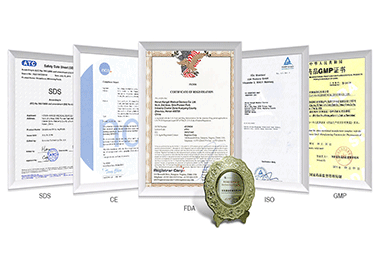
KONGDY Medical is a leading OEM manufacturer of transdermal patches with 36 years of industry experience (founded 1989), certified under ISO 13485:2016, FDA registered, CE marked, and GMP compliant. Our facility in Henan, China operates 12 automated production lines with a total capacity of 20 million sachets/month, including HPLC/GC QC labs, ICH Q1A(R2) stability chambers, and a marketing-collaboration R&D group focused on brand-positioning strategy, claims-substantiation documentation, marketplace launch support, and lifecycle retention marketing. We serve 200+ brand partners across 30 countries with full technology transfer, formulation development, and scale-up support.