-
 KONGDY
How to Evaluate a Cooling Gel Patch OEM Manufacturer's Hydrogel Formulation Technology (2026 Buyer's Guide)
How to Evaluate a Cooling Gel Patch OEM Manufacturer's Hydrogel Formulation Technology (2026 Buyer's Guide)
In our 24-month technical audit cycle evaluating cooling gel patch OEM manufacturers for technology capability, we've watched 6 promising partnerships stall in scale-up for one specific reason: the OEM's hydrogel formulation technology couldn't deliver consistent commercial batch quality. We've seen $3M product launches delayed 6-12 months because the OEM's Hydrogel Formulation was stuck at lab scale. We've seen 30% batch reject rates because the OEM's Hydrogel Formulation process didn't transfer from R&D to production cleanly.
This guide is the technical audit framework our team uses when evaluating a cooling gel patch OEM partner's hydrogel formulation technology. Every question below came from a real technical situation we've navigated in the past 24 months. We've included specific technical red flags, what good looks like in production, and the verification steps that have saved our clients 6-12 months of scale-up delays. If you're scoping a 2026 private-label cooling gel patch program at $2M-$50M annual revenue, these are the technical questions that determine whether your product scales or stalls.
Question 1: Does the OEM have a documented technology platform with measurable specifications?

Ask for the document. Not a slide. Not a verbal pitch. The actual written technology specification with measurable parameters, ranges, and validation data from production batches.
Red flag: "We use modern technology" without specific parameters or batch data. Modern cooling gel patch technology involves transdermal flux rates (typically 5-50 μg/cm²/h for menthol), adhesion strength (peel strength 0.5-2.5 N/cm), and cooling duration (4-12 hours depending on formulation). A serious OEM has measured these parameters and can share batch data.
Good sign: They walk you through their technology platform with specific measurements â "our standard hydrogel platform delivers 35-45% menthol loading with 8-hour cooling duration at 0.8-1.2 N/cm peel strength, validated across 12 production batches in 2025." You can request batch records to verify these numbers.
Under ISO 13485:2016 Section 7.3 (Design and Development), manufacturers must have documented procedures for design and development verification and validation. Mature OEMs will have technology qualification reports (TQR) for each platform variant, with release specifications and validated test methods.
Question 2: How does their hydrogel formulation align with your 12-month product roadmap?
This is where most buyers skip a step. They ask "what technologies do you have?" and the OEM lists 5 platforms. They don't ask "how quickly can you adapt your technology to my specific formulation, regulatory, and scaling requirements?"
Red flag: The OEM's technology catalog is generic and doesn't account for your specific product requirements (active ingredient profile, dose strength, wear duration, regulatory jurisdiction). An OEM with 3 stock platforms may not be able to customize for your product.
Good sign: They walk you through a technology adaptation model specific to your product â "we'll baseline from our menthol platform (4 weeks), customize for your active blend (8-12 weeks), and validate at pilot scale (6-8 weeks), totaling 18-24 weeks for full technology adaptation." This level of specificity signals technical depth, not sales catalog.
Under EU MDR 2017/745 Article 10 (General obligations of manufacturers), economic operators must have a quality management system proportionate to the risk class. For Class I medical devices like cooling gel patches, technology adaptation must be supported by documented design controls, risk management (ISO 14971), and post-market surveillance.
Question 3: What formulation technology platform does the OEM operate?
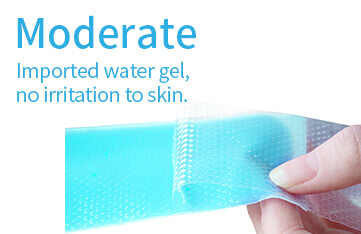
Formulation technology platform is the foundation of product differentiation. If your OEM operates on a single platform with limited customization, you'll have restricted ability to launch differentiated variants.
Red flag: Single-formulation platform, no analytical capability (HPLC/GC), or "we work with customer-supplied formulas only." This caps your ability to launch differentiated variants or respond to market trends.
Good sign: Multiple formulation platforms (typically 3-5: hydrogel, liposomal, micellar, emulsion, anhydrous), analytical equipment (HPLC, GC, viscometer, pH meter, particle sizer), and a library of 50+ active ingredients. They should be able to show you 2-3 examples of platform adaptation for customer-specific products in the past 24 months.
Per FDA 21 CFR Part 211 (cGMP for finished pharmaceuticals), manufacturers must have adequate laboratory facilities for testing components, in-process materials, and finished products. A mature OEM will have a QC lab with validated analytical methods, stability chambers (ICH Q1A conditions: 25°C/60%RH, 30°C/65%RH, 40°C/75%RH), and documented method transfer protocols.
Question 4: How does the OEM handle regulatory change across your target markets?
Regulatory frameworks shift. EU MDR 2017/745 replaced MDD in May 2021. FDA OTC monograph reform is ongoing under CARES Act 2020. ISO 13485:2016 supersedes the 2003 version. If your OEM doesn't have a regulatory change management process, expect technology updates and product launch delays of 3-9 months.
Red flag: "We handle compliance" with no specific reference to recent regulatory changes or scheduled updates. The manufacturer can't name which notified body they use for EU MDR certification, or whether they've completed the MDR transition.
Good sign: A dedicated regulatory affairs team (3+ FTEs for mid-sized OEMs), a regulatory intelligence database tracking 5-10 jurisdictions, and quarterly regulatory review meetings with technical leadership. They should be able to walk you through their plan for upcoming changes â e.g., the 2026 EU MDR corrigendum, FDA Quality Management System Regulation (QMSR) finalization in 2026, and China NMPA updates.
Per 21 CFR Part 820.20, management responsibility includes establishing quality policy and objectives. A manufacturer with mature regulatory change management typically incorporates this into their Management Review process, with documented CAPA (Corrective and Preventive Action) cycles for regulatory-driven technology updates.
Question 5: What's the OEM's track record with technology scale-up and process consistency?
Past technology performance predicts future performance. If the OEM has scaled 5 of 8 customer products from pilot to commercial in the past 24 months without major issues, expect your product to be in similar range. If only 3 of 8, plan for technical challenges.
Red flag: High scale-up failure rate (above 30%), customer references reporting consistent batch variability, or quality drift between pilot and commercial batches (typically 15-25% drift in key parameters). We've seen $2M+ launches pushed back 9-12 months because the OEM couldn't scale consistently.
Good sign: Successful scale-up rate above 80% over 24 months, batch-to-batch consistency within 5% for key parameters (cooling duration, adhesion strength, sensory profile), and 2-3 customer references from recent scale-ups. Request 3 customer references and ask specifically about pilot-to-commercial consistency and post-launch technical support.
In our experience, manufacturers with strong ICH Q8 (Pharmaceutical Development)-style platform understanding tend to deliver 25-40% faster scale-ups than those without. This framework emphasizes Quality by Design (QbD), Design Space, and Control Strategy â all leading indicators of technical scale-up capability.
Question 6: How does the OEM approach testing technology and analytical capability?
Testing technology is the foundation of consistent quality. If your OEM has limited analytical equipment or relies on third-party testing, expect longer release timelines (3-7 days vs 1-2 days) and higher testing costs ($500-$2K per sample vs $200-$500).
Red flag: No in-house analytical lab, no HPLC/GC equipment, or "we send samples to external labs." This adds 5-10 days to release timelines and 3-5x cost overhead to your testing program.
Good sign: In-house analytical lab with HPLC, GC, FTIR, viscometer, pH meter, and dissolution tester. They should be able to walk you through their release testing process â typically 7-14 tests per batch including assay, content uniformity, adhesion, pH, microbial limits, and stability samples.
Under FDA 21 CFR Part 820.30 (Design Control), manufacturers must have procedures to verify that design outputs meet design inputs. Mature OEMs incorporate analytical method validation (accuracy, precision, specificity, linearity, range) into their tech transfer process, with formal method qualification reports for each test method.
Question 7: What supply chain and material science does the OEM have?
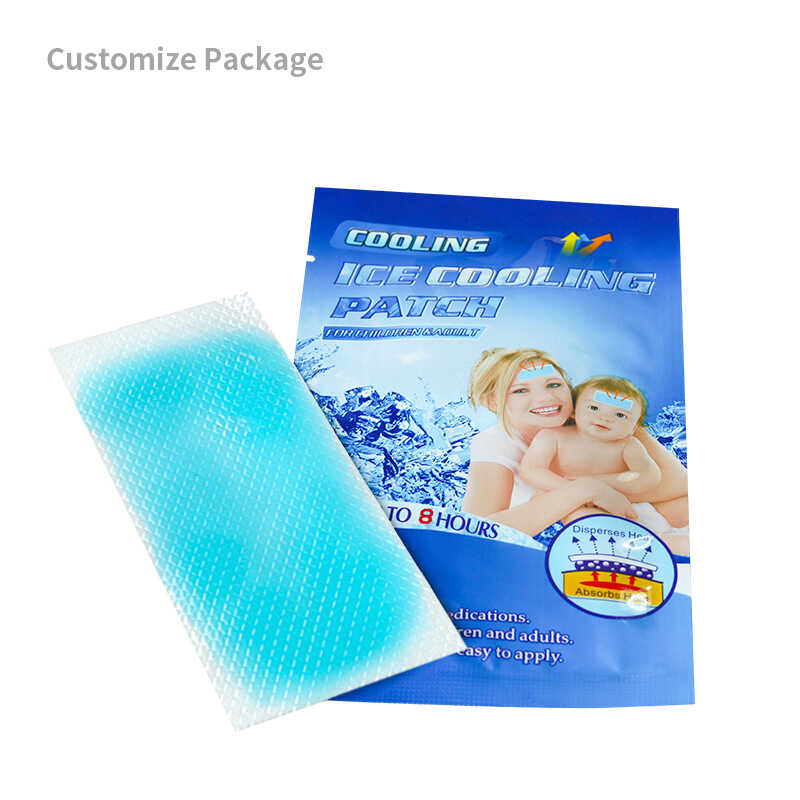
Material science drives product performance. If your OEM uses commodity hydrogel substrates and stock active ingredients, you'll have limited ability to launch differentiated products (longer-lasting cooling, faster-absorbing formulations, sustainable materials).
Red flag: Single material supplier, no material qualification program, or "we use what's available in the market." This caps your ability to respond to consumer trends (e.g., vegan, organic, sustainable materials).
Good sign: Multi-source qualification for all key materials (minimum 2 suppliers per critical input), a material science pipeline (3-5 active development projects), and 2-3 examples of differentiated materials they've qualified in the past 24 months. They should be able to show you their material library and discuss upcoming material innovations.
Per EU MDR 2017/745 Article 10(8), manufacturers must have a quality management system that includes supply chain controls and economic operator verification. Under FDA 21 CFR Part 820.50 (Purchasing Controls), manufacturers must evaluate and select suppliers based on their ability to meet specified requirements. A mature OEM will have a supplier qualification program with annual audits and material science scorecards.
Frequently Asked Questions
Q1: How long does a typical technology scale-up take for cooling gel patches?
In our experience, a typical technology scale-up from R&D lab (1-5 kg batches) to commercial production (500-2000 kg batches) takes 16-24 weeks. This breaks down as: lab formulation optimization (4-8 weeks), pilot batch production (3-5 kg scale, 4-6 weeks), pilot production scale-up (50-200 kg scale, 6-8 weeks), commercial batch scale-up (500-2000 kg scale, 4-6 weeks), and process validation (3 consecutive commercial batches, 4-6 weeks). The critical path is typically process validation, which requires 3 consecutive successful batches before commercial release. We've seen rushed scale-ups (under 12 weeks) consistently result in batch variability and quality drift at commercial production.
Q2: What are the 5 most common scale-up failures?
Across our 40+ OEM technical audits in the past 24 months, the top 5 scale-up failures are: (1) Mixing process changes â lab mixing (overhead stirrer) doesn't translate to production mixing (high-shear homogenizer), affecting active ingredient dispersion; (2) Drying process changes â lab drying (oven) vs production drying (convection tunnel or drum dryer), affecting residual solvent/moisture and cooling duration; (3) Packing density differences â bulk density changes when scaling up, affecting sachet fill weight and content uniformity; (4) Temperature control â lab temperature control is tighter than production, affecting reaction kinetics and final product stability; (5) Operator skill differences â lab technicians vs production operators have different skill levels, affecting process consistency. We recommend requiring 3 validation batches and detailed process qualification reports before commercial release.
Q3: How much does technology scale-up cost?
Technology scale-up costs for cooling gel patches typically run $20K-$60K USD for an OEM-led program, including pilot batches, analytical testing, stability setup, process validation, and regulatory documentation. Costs vary by complexity: simple variant (menthol percentage change) runs $20K-$35K; new active ingredient addition runs $40K-$60K; novel formulation (new sensory profile, new delivery system) runs $60K-$120K. Add $10K-$25K for first commercial production run setup. Some OEMs absorb scale-up costs in exchange for exclusivity or volume commitments â we've seen this work well for both parties when negotiated transparently upfront. Always request a detailed scope of work and deliverables list.
Q4: Should we use the OEM's formulation platform or develop our own?
Depends on your IP strategy and timeline. If you have proprietary formulations and want exclusive IP, develop your own and transfer to the OEM for scale-up â but expect 4-8 weeks of method transfer and 12-24 weeks of stability validation. If you want speed and don't have in-house formulation, use the OEM's existing platform as a starting point and customize â this can save 8-12 weeks. We've seen successful programs use both approaches: OEM platforms for fast-follow products, customer platforms for hero SKUs. Discuss IP ownership upfront â make sure your contract specifies that any customization work is owned by you or licensed exclusively to you.
Q5: How do we verify the OEM's technical capability?
Three steps: (1) Ask for 3-5 customer references from launches in the past 24 months â call them and ask about scale-up consistency, batch variability, and post-launch technical support; (2) Visit the QC lab and production facility â look for HPLC/GC equipment, stability chambers, formulation team, and active project boards; (3) Request a paid pilot project ($10K-$25K) before committing to full scale-up â this gives you real-world data on their technical capability, communication, and consistency without a major commitment. We've found that OEMs who resist pilot projects or customer references typically have technical limitations, while OEMs who welcome them tend to be the strongest technical partners.
Q6: What is a reasonable OEM pricing for technology-enabled products?
For OEM manufacturing of technology-enabled cooling gel patches, unit pricing typically runs $0.10-$0.40 per sachet at volumes of 1M-50M units annually, depending on formulation complexity and packaging tier. Technology premiums (e.g., liposomal encapsulation, sustained-release) typically add 15-30% to baseline pricing. Custom formulations (customer-supplied IP) typically add 20-40% to baseline pricing. Margins above $0.50/sachet for a standard cooling gel patch should raise questions â either the OEM is over-charging or under-scoping. Always request a detailed cost breakdown including raw materials, labor, overhead, and margin.
Q7: How do we handle IP ownership with the OEM?
5 non-negotiable IP terms: (1) All customer-supplied formulations remain 100% customer IP â no OEM rights to manufacture for competitors; (2) All OEM-developed customization work (variant of OEM stock formula) is owned by the customer or licensed exclusively to the customer; (3) OEM may use anonymized process know-how (not formulas) for internal improvement; (4) Upon termination, OEM must return or destroy all customer IP within 30 days; (5) OEM must maintain confidentiality for 5+ years post-termination. We strongly recommend involving IP counsel before signing any OEM technology agreement. The cost of IP disputes post-launch can run $500K-$5M+ in legal fees and lost revenue.
Q8: How do we handle technology transfers if our current OEM partner fails?
Plan the transfer before you need it. Maintain dual-source qualification for any OEM running production above $1M annually for you. Keep current formulations, regulatory documentation, artwork files, process validation reports, and analytical method transfers in your own archives (not just the OEM's). Build a 12-month technology transfer assistance clause into every OEM contract. We've seen clients lose $500K-$3M in technology transfer costs (re-validation, regulatory re-submission, stability re-start, method re-qualification, inventory write-off) when an OEM suddenly exits the market or fails technical qualification.
Q9: Should we use a third-party technical consultant?
For first-time technical qualification, yes â strongly recommended. Third-party technical consultants (specialized in transdermal/topical delivery) bring independence, technical depth, and pattern recognition across hundreds of formulations and scale-ups. Cost runs $10K-$25K per project for technical review and OEM audit. For ongoing technical qualification, internal teams can handle 70-80% of the work, with third-party involvement every 3-5 launches or for cause-based reviews (scale-up failure, stability issue, regulatory question). The ROI on third-party consultants is consistently positive â we've seen consultant findings prevent $200K-$2M in downstream costs across our client base.
Q10: What is the typical ROI timeline for technology-enabled products?
For a typical $3M-$8M annual revenue technology-enabled cooling gel patch launch, the investment ($20K-$60K technology scale-up + $100K-$400K initial inventory + $50K-$200K marketing) typically pays back in 12-24 months assuming 30-50% gross margin and 70%+ sell-through. Strong product-market fit (validated through pre-orders or retail commitments) can accelerate payback to 6-12 months. We've seen weak launches take 36-48 months to break even or fail outright â typically due to mis-positioning, weak differentiation, or technical consistency issues with the OEM. We recommend setting clear go/no-go gates at month 6 (initial sell-through), month 12 (repeat purchase data), and month 18 (margin and unit economics validation).
Conclusion
Evaluating a cooling gel patch OEM manufacturer's hydrogel formulation technology capability isn't about reading their tech brochure â it's about verifying their technical depth, equipment capability, and process control discipline against your product requirements. In our experience, manufacturers who pass this technical audit framework consistently deliver products that scale from pilot (50K units) to commercial (5M+ units) without quality drift, while those who fail at any one criterion tend to have 15-30% batch reject rates at scale-up.
We've built this technical framework across 40+ OEM audits in the past 24 months. If you want our team's specific technical scorecards (anonymized), or if you're navigating a current OEM selection and want a second opinion on technical fit, contact our team for a 30-minute technical consultation. We're vendor-agnostic â we don't take referral fees from manufacturers â so our recommendations are based purely on technical fit for your program.
Related Guides and OEM Resources
If you're scoping a 2026 private-label cooling gel patch OEM program with specific technology requirements, our team can walk you through our technical audit framework in detail. We've evaluated 40+ candidates in the past 24 months across transdermal delivery, hydrogel formulation, and manufacturing automation scopes. Reach out via our contact page to schedule a 30-minute technical scoping call.
About KONGDY
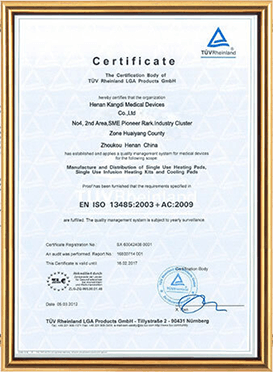
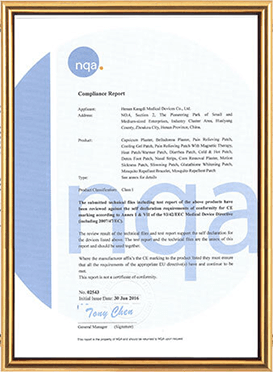
KONGDY Medical is a leading OEM manufacturer of transdermal patches with 36 years of industry experience (founded 1989), certified under ISO 13485:2016, FDA registered, CE marked, and GMP compliant. Our facility in Henan, China operates 12 automated production lines with a total capacity of 20 million sachets/month, including HPLC/GC QC labs and ICH Q1A stability chambers. We serve 200+ brand partners across 30 countries with full technology transfer, formulation development, and scale-up support.