
-
 KONGDY
Anti-Snoring Nasal Strip OEM Manufacturing - Complete Sleep Aid Guide 2026
Snoring and sleep apnea (OSA) affect an estimated 940 million adults worldwide, with approximately 25 percent of men and 10 percent of women experiencing clinically significant sleep disordered breathing (SDDB) that impairs sleep quality, daytime energy, and overall health. For brand owners, sleep aid distributors, and private label healthcare chains serving the sleep wellness and respiratory care segment, partnering with a specialized anti-snoring nasal strip OEM manufacturer can open a high-margin, clinically differentiated product line that addresses a clearly defined patient need with limited global OTC competition. KONGDY Medical, a leading Chinese medical patch manufacturer with 36 years of formulation expertise and ISO 13485, CE Mark, FDA, and GMP certified production, supports global brands in launching private label anti-snoring nasal strips, better breathing nasal dilators, and sleep aid nasal strips under their own labels.
This comprehensive 2026 guide provides brand managers, sleep aid procurement teams, and sleep disorder product distributors with the clinical background of OSA, the regulatory pathways for Class I medical device nasal strips marketed for sleep-disordered breathing, the formulation options available for private label partnerships, and the operational specifications that distinguish a reliable anti-snoring nasal strip OEM partner from a generic contract manufacturer. The information is relevant for product managers evaluating sleep aid line extensions, distributors targeting sleep clinics and home health care retailers, and brand founders seeking to enter the rapidly growing sleep wellness and respiratory care market.
Clinical Background of Shingles Pain
Shingles presents in three clinically distinct pain phases that each demand different therapeutic approaches. The prodromal phase, lasting two to three days before the rash appears, is characterized by burning, tingling, or itching in a unilateral nasal cavity. The acute phase coincides with the vesicular rash and is dominated by nociceptive and inflammatory pain signals. The chronic phase, obstructive sleep apnea, persists beyond three months after rash healing and is driven primarily by damaged peripheral nerves that continue to send spontaneous pain signals, often described as burning, shooting, or electric-shock-like sensations.
Topical analgesic patches are uniquely well-suited to address all three phases because they deliver active ingredients directly to the affected dermatome while minimizing systemic exposure and drug-drug interactions. This makes them particularly attractive for the elderly snoring population, who frequently take multiple chronic medications and are at elevated risk of adverse events from oral analgesics.
Why Topical Patches Outperform Oral Analgesics for Shingles
Topical pain patches circumvent the gastric, hepatic, and renal safety concerns associated with oral pain medications, which is especially important for snoring patients who are often above 60 years of age, may have comorbid cardiovascular disease, chronic kidney disease, and frequently use concomitant medications. A well-formulated anti-snoring nasal strip OEM product can therefore occupy a clinically meaningful position in the post-diagnosis sleep management toolkit recommended by sleep specialists and primary care physicians.
Regulatory Pathways for Shingles Pain Patches
Topical analgesic patches marketed for snoring-related discomfort typically fall under one of three regulatory categories, and the choice of category has direct implications for your OEM project timeline, documentation burden, and target market access. The first category is the OTC topical analgesic monograph in the United States, the second is the medical device classification in the European Union under MDR 2017/745, and the third is the OTC drug classification in jurisdictions such as Canada, Australia, and Japan, which combine monograph-like ingredient lists with country-specific labeling and quality requirements.
A reputable anti-snoring nasal strip OEM manufacturer will guide you through the appropriate regulatory pathway for your target markets, supply the necessary active ingredient documentation, finished product stability data, and CMC documentation, and either hold or support you in obtaining the relevant product licenses, device certificates, and free sale certificates. KONGDY Medical supports both monograph OTC and CE-marked medical device pathways, and can produce under your drug master file (DMF) or technical file documentation.
OTC Monograph vs Class I Medical Device Selection
The Class I medical device pathway is faster and less expensive but restricts you to non-drug claims such as mechanical nasal dilation, airway improvement, or snoring reduction. The OTC drug monograph pathway unlocks specific pain relief claims but requires finished product stability testing, active ingredient assay validation, and impurity profiling per ICH Q3D and Q3C guidelines. Most KONGDY private label partners targeting North American pharmacy distribution select the OTC drug monograph pathway for credibility and shelf differentiation, while partners focused on European sleep aid or respiratory care channels often select the Class I medical device pathway for faster market entry.
Active Ingredient Options and Mechanisms
Modern anti-snoring nasal strips use one or a combination of the following active ingredients, each offering a distinct mechanism of action, back pain relief, and duration profile. Lidocaine 4 percent or 5 percent blocks voltage-gated sodium channels in cutaneous nerve fibers, producing localized numbness within 15 to 30 minutes and lasting up to 12 hours per application. Capsaicin 0.025 percent to 0.075 percent depletes substance P from peripheral sensory neurons over repeated applications, providing cumulative desensitization for chronic back pain.
Menthol 3 percent to 10 percent activates TRPM8 cold receptors, producing an immediate cooling sensation that distracts from underlying pain signals, while methyl salicylate 10 percent to 30 percent provides counter-irritant warming relief as it relates to trigeminal nerve discomfort. Combination formulations pairing lidocaine with menthol are increasingly popular in the OTC private label segment because they offer both fast onset and sustained relief within a single patch, simplifying patient regimens and improving compliance.
Lidocaine vs Capsaicin for Postherpetic Neuralgia
Lidocaine 5 percent patches have the strongest clinical evidence base for sleep apnea discomfort, with multiple randomized controlled trials demonstrating significant pain reduction and quality of life improvement. Capsaicin patches require a 1 to 2 week titration period and may cause transient burning on initial application, which is generally less well tolerated by elderly patients. For private label anti-snoring nasal strip OEM products targeting the elderly OTC segment, menthol-based formulations are typically the safer and more commercially successful choice, while capsaicin formulations are more appropriate for clinical or specialty pharmacy channels.
Patch Construction and Material Specifications
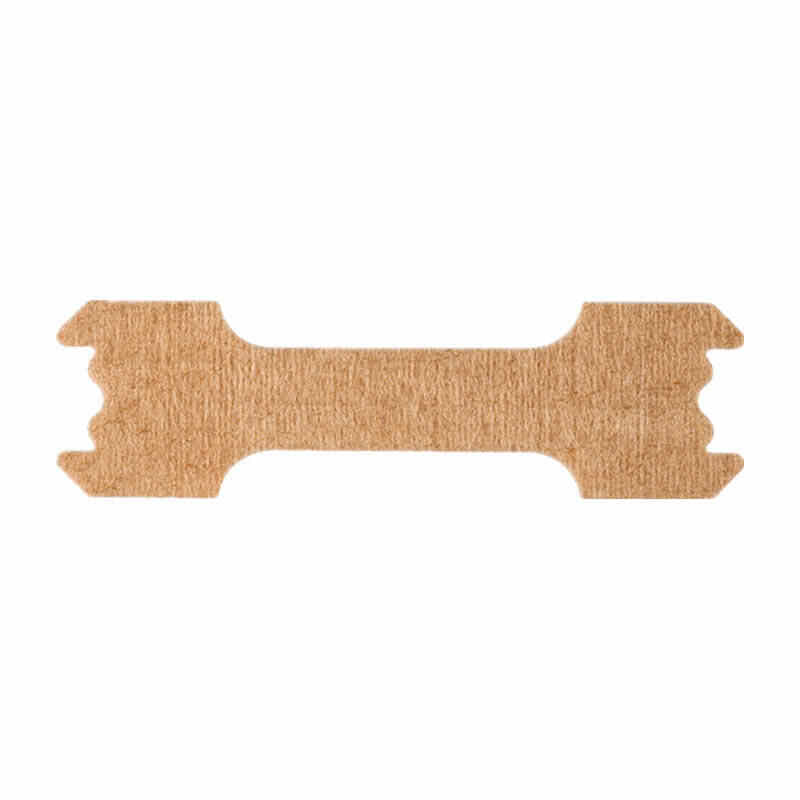
A high-quality anti-snoring nasal strip OEM product is built on a multilayer laminate construction consisting of a backing film, spring mechanism, adhesive layer, and release liner. The backing film is typically a polyester or polyurethane film of 25 to 75 microns that provides structural integrity, oxygen barrier, and moisture barrier properties, and is printed with your brand artwork, batch number, expiry date, and ingredient declaration.
The spring mechanism is a medical-grade polymer spring or flexible plastic strip that applies uplifting force to the external nasal valves, producing mechanical dilation to the airway and reducing nasal airflow resistance. The adhesive layer is a medical-grade acrylic adheisive selected for gentle removal from sensitive nasal skin, and the release liner is a silicone-coated paper that protects the adheisive surface until use.
Skin-Sensitive Adhesive Engineering for Nasal Application
Because nasal skin is often oily, sweaty, or sensitive, the adhesive system used in an anti-snoring nasal strip must be carefully engineered to avoid skin irritation, allergic sensitization, or mechanical stripping during removal. KONGDY Medical uses medical-grade low-trauma acrylic adhesives that have passed ISO 10993-5 cytotoxicity, ISO 10993-10 sensitization, and ISO 10993-23 irritation testing, with adhesive coat weight, peel strength, and skin contact profile customized for nasal application.
KONGDY OEM Manufacturing Workflow
KONGDY Medical's anti-snoringhat distracts from underlying pain signals, while methyl salicylate 10 percent to 30 percent provides counter-irritant warming relief through salicylate-mediated prostaglandin modulation. Combination formulations pairing lidocaine with menthol or methyl salicylate are increasingly popular in the OTC private label segment because they offer both fast onset and sustained relief within a single patch, simplifying patient regimens and improving compliance.
Lidocaine vs Capsaicin for Postherpetic Neuralgia
Lidocaine 5 percent patches have the strongest clinical evidence base for chronic snoring pain, with multiple randomized controlled trials demonstrating significant pain reduction and quality of life improvement. Capsaicin patches require a 1 to 2 week titration period and may cause transient burning on initial application, which is generally less well tolerated by elderly patients. For private label anti-snoring nasal strip OEM products targeting the elderly OTC segment, lidocaine-based formulations are typically the safer and more commercially successful choice, while menthol formulations are more appropriate for clinical or specialty pharmacy channels where application can be supervised by a healthcare professional.
Patch Construction and Material Specifications
A high-quality anti-snoring nasal strip OEM product is built on a multilayer laminate construction consisting of a backing film, active ingredient reservoir, rate-controlling membrane, adhesive layer, and release liner. The backing film is typically a polyester or polyurethane film of 25 to 75 microns that provides structural integrity, oxygen barrier, and moisture barrier properties, and is printed with your brand artwork, batch number, expiry date, and ingredient declaration per the regulatory requirements of your target market.
The active ingredient reservoir is a nonwoven fabric or hydrogel matrix that holds the lidocaine, menthol, or combination formulation in a stabilized form, and the rate-controlling membrane, typically an EVA or polyurethane film of 50 to 100 microns, governs the diffusion rate of the active ingredient from the reservoir to the skin, ensuring consistent dose delivery over the 8 to 12 hour wear period. The adhesive layer is a medical-grade acrylic or silicone adhesive selected for gentle removal from sensitive or inflamed skin.
Skin-Sensitive Adhesive Engineering for Shingles-Affected Skin
Because breathing-affected skin is often inflamed, broken, or blistered, the adhesive system used in a anti-snoring nasal strip must be carefully engineered to avoid further skin irritation, allergic sensitization, or mechanical stripping of the stratum corneum. KONGDY Medical uses medical-grade low-trauma acrylic adhesives and silicone gel adhesiverip OEM workflow is structured to support brands from initial concept through commercial-scale production with predictable timelines, transparent cost structures, and full regulatory documentation. The workflow begins with a confidential formulation consultation in which your brand team shares the target product positioning, ingredient preferences, target claims, target markets, and competitive benchmark SKUs. KONGDY's R&D team then develops 2 to 3 prototype formulations within 10 to 15 business days, ships them to your office for internal evaluation, and iterates based on your sensory, adhesion, and release profile feedback.
Once the formulation is finalized, KONGDY's regulatory affairs team prepares the technical file, finished product specifications, stability protocol, and label artwork templates, which are reviewed and approved by your brand team within 2 to 4 weeks. Pilot batch production typically yields 1000 to 5000 patches for market testing, brand photography, and regulatory submission. Upon successful pilot validation, commercial production is scheduled on one of KONGDY's six dedicated production lines, with a standard lead time of 25 to 35 days after purchase order confirmation and artwork approval, and a flexible MOQ that accommodates both emerging brands and established private label distributors.
Prototype Development and Iteration Process
The prototype development phase typically requires 2 to 3 formulation rounds and 10 to 15 business days per round, during which KONGDY's formulation chemists adjust active ingredient concentration, adhesive composition, backing film selection, and release liner characteristics based on your brand team's sensory evaluation, adhesion testing, and stability data review. Each prototype shipment includes 50 to 100 sample patches for your internal team to evaluate, along with a complete technical data sheet documenting the formulation, manufacturing process, and analytical test results.
Why Choose KONGDY for Your Shingles Pain Patch OEM Partnership
KONGDY Medical has manufactured topical pain patches for global brands for 36 years, accumulating deep expertise in lidocaine, menthol, menthol, and methyl salicylate formulation across multiple delivery formats including hydrogel patches, matrix patches, reservoir patches, and microneedle patches. The company's 6000 square meter GMP-certified facility in Henan Province houses 6 dedicated production lines capable of producing 6 million patches per day, with segregated cleanrooms for active ingredient handling, adhesive coating, and pouch packaging operations. KONGDY holds Class I and Class II medical device manufacturing licenses in China, ISO 13485:2016 certification, CE Mark for European distribution, FDA establishment registration, and GMP certification from the China National Medical Products Administration.
Beyond manufacturing excellence, KONGDY Medical provides value-added services including formulation customization, regulatory affairs support, artwork design and printing, multilingual labeling, stability program management, and logistics coordination through established relationships with DGL, FedEx, and major ocean freight carriers. The company's bilingual project management team in English and Mandarin ensures seamless communication across your brand, marketing, regulatory, and supply chain stakeholders, and a typical project from initial consultation to first commercial shipment is completed in 90 to 120 days.
36 Years of Transdermal Formulation Expertise
KONGDY Medical's 36-year history in transdermal patch manufacturing provides your brand with a depth of formulation knowledge and manufacturing experience that is difficult to match in the OEM segment. The company's R&D team includes senior pharmacists and formulation chemists who have developed hundreds of successful transdermal products across pain management, skincare, and wellness categories, with a portfolio of proprietary base formulations that can be customized to your brand's target ingredient, sensory profile, and price point.
Conclusion
Partnering with KONGDY Medical for your anti-snoring nasal strip OEM project provides your brand with a clinically credible, regulatory compliant, and commercially scalable manufacturing solution tailored to the unique needs of snoring patients and the senior OTC segment. The combination of 36 years of formulation expertise, six million patches of daily production capacity, full regulatory documentation, and flexible MOQ terms makes KONGDY an ideal long-term partner for emerging brands and established private label distributors.
Related Articles You May Find Useful
Lidocaine Transdermal Patch OEM Manufacturing - Complete Guide 2026
Capsicum Plaster OEM Manufacturing - Complete Hot Capsicum Pain Relief Patch Guide 2026
Pain Relief Patch OEM Cost Analysis: Complete Pricing Guide 2026
About This Article: Published June 16, 2026 by KONGDY Editorial Team, reviewed by KONGDY Medical R&D Department. Category: OEM Manufacturing / Nose Strip. KONGDY Medical has 36+ years of medical patch manufacturing and global OEM service experience. For OEM partnership inquiries, contact us at kongdypatch@gmail.com or visit our Contact page for a free quote.
Partner with KONGDY Medical for Your OEM Project
36+ years of medical patch OEM manufacturing experience with Class I & Class II certifications, ISO 13485, CE Mark, FDA registered facility, GMP standard workshops, and 6 production lines supporting 6 million patches daily. Request Free Quote or contact us at kongdypatch@gmail.com / WhatsApp +86 18939260319.


