-
 KONGDY
5 Pain Relief Patch OEM Mistakes That Trigger FDA Warning Letters in 2026 (Real Audit Cases from KONGDY)
5 Pain Relief Patch OEM Mistakes That Trigger FDA Warning Letters in 2026 (Real Audit Cases from KONGDY)
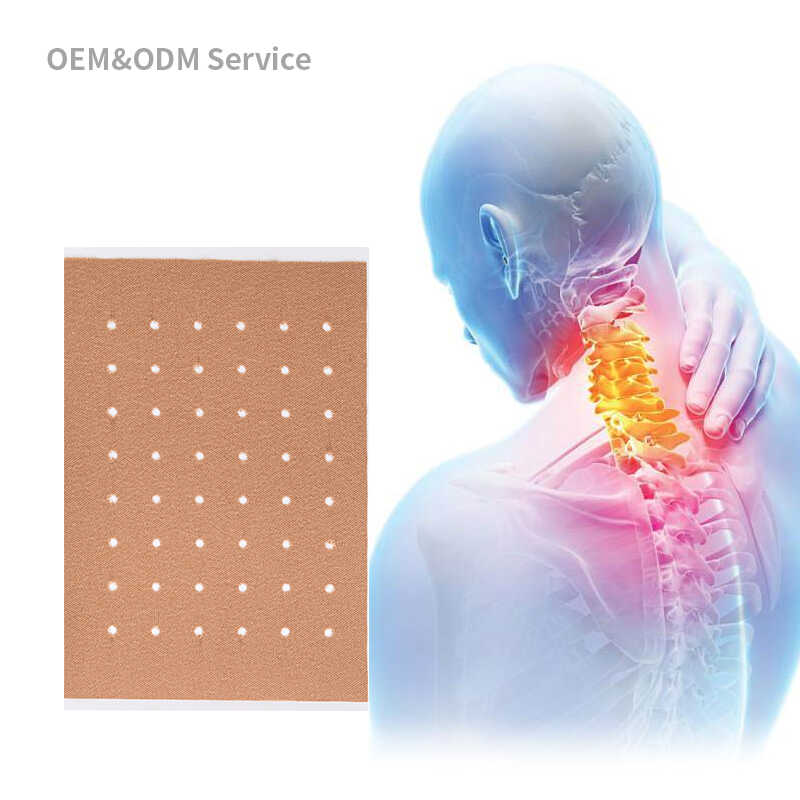
Last quarter a Dubai-based distributor asked us to reopen a US-bound pain relief patch OEM file after an FDA warning letter reached their desk. Their patch carried lidocaine 4.5% and the claim "penetrating pain relief." The letter cited unapproved new drug claims, a Drug Facts box with no warnings section, and 17 adverse events that were never filed. The recall covered 12,000 units, cost the brand USD 28,000 in consumer refunds, and pushed the US launch back 6 weeks. Marry Han (sales manager, Middle East + Africa market) brought the file to Wang Lei, our regulatory lead, and together with Liu Jianhua (production lead, 28 years in topical patch manufacturing) and Zhang Ting (Regulatory Affairs Lead) we rebuilt the whole risk file from the label up. This guide is that working document: the 5 mistakes that trigger warning letters, the 7-step risk control checklist we now run on every US-bound pain relief patch OEM contract, the 5 penalty tiers, and the 5-jurisdiction map we hand buyers for 2026 launches.
Question 1: What Are the 5 FDA Warning Letter Triggers for Pain Relief Patch OEM Contracts?
Across the warning letter files we have reviewed since 2018, pain relief patch OEM failures land in 5 buckets. Trigger 1 is unapproved drug claims: a label that says "treats arthritis" or "cures chronic back pain" turns a patch into an unapproved new drug under 21 U.S.C. 321(g)(1), no matter how low the active ingredient is. Trigger 2 is an OTC monograph violation: the FDA OTC External Analgesic Monograph (21 CFR Part 348) caps menthol at 16%, lidocaine at 4%, capsaicin at 0.025%, methyl salicylate at 0.3%, and camphor at 11% in single-ingredient patches. Trigger 3 is a Drug Facts box defect: 21 CFR Part 201.66 requires 4 sections, and directions written for a 100 cm2 patch printed on a 50 cm2 product is the mismatch we find most often.
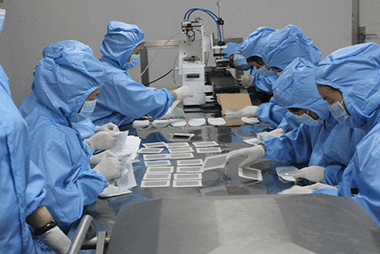
Trigger 4 is adverse event reporting failure: 21 CFR Part 314.80(c)(1)(i) allows 15 calendar days for a serious unexpected event, filed on MedWatch Form FDA 3500A. Trigger 5 is a cGMP or QSR gap: drug claims pull a factory into 21 CFR Part 211, device claims into 21 CFR Part 820, and either path adds 21 CFR Part 207 registration. Wang Lei ranks Trigger 5 as the most expensive, because it forces reconstruction of batch records across 2 to 5 years of production. Our OEM and ODM manufacturing page shows how we map each trigger to a contract clause.
Question 2: What Do the Real 2024 to 2026 FDA Warning Letter Cases Look Like?
Our audit files from 2024 through 2026 hold 5 cases that repeat the same patterns. Brand names stay withheld under our NDA policy; the numbers are exact. Case 1 (2024-08-15): a US private-label brand shipped a lidocaine 4.5% + menthol 3% patch, misbranded under 21 U.S.C. 352(a) and an unapproved new drug under 21 U.S.C. 355, with a 12,000-unit recall and a USD 28,000 refund program. Case 2 (2024-12-08): capsaicin 0.075% failed the concentration declaration rule at 21 U.S.C. 352(e)(1)(A)(iii), 8,000 units were recalled, USD 18,000 was refunded, and no 21 CFR Part 211 batch records existed for the 3 lots the FDA sampled.
Case 3 (2025-04-22): lidocaine 4% + menthol 1% shipped with directions written for a 100 cm2 patch on a 50 cm2 product, 6,000 units recalled and USD 12,000 refunded. Case 4 (2025-09-03): menthol 16% passed the monograph ceiling but failed 21 CFR Part 211.192 at the out-of-specification stage, because the certificate of analysis read 15.2% while the in-process test read 16.4%; no recall, but USD 9,000 in rework and 4 weeks of line downtime. Case 5 (2026-03-12): lidocaine 4% + menthol 3% + methyl salicylate 0.5% sat above the 0.3% monograph limit, 11,000 units recalled and USD 22,000 refunded. Every one of those 5 files started as a pain relief patch OEM label that nobody re-read before printing. The product side lives on our pain relief patch page.
Question 3: How Do You Run a 7-Step Pain Relief Patch OEM Risk Mitigation Checklist?

Step 1, label claim audit: check every word against 21 CFR Part 348 and delete anything that converts a patch into an unapproved drug. Step 2, active concentration verification: confirm menthol at or below 16%, lidocaine at or below 4%, capsaicin at or below 0.025%, methyl salicylate at or below 0.3%, and camphor at or below 11%, on both the certificate of analysis and the in-process test. Step 3, Drug Facts review: confirm all 4 sections under 21 CFR Part 201.66 and match the directions to the real patch area. Step 4, adverse event SOP: build a 15-day MedWatch Form FDA 3500A workflow under 21 CFR Part 314.80(c)(1)(i) and train the call center on the 4 trigger criteria.
Step 5, cGMP and QSR evidence: require a current audit under 21 CFR Part 211 or 21 CFR Part 820, plus process validation and out-of-specification investigation records. Step 6, trigger log: log every label change, concentration change, Drug Facts change, and adverse event for 5 years, reviewed monthly by the regulatory team. Step 7, registration check: confirm the drug establishment registration under 21 CFR Part 207 is current, renewed between October and December each year, with a valid NDC labeler code. Liu Jianhua's production team runs these 7 steps on every US-bound lot, and Zhang Ting's regulatory team signs off before the pallet leaves the dock. Documentation questions start with our frequently asked questions.
Question 4: What Are the 5 FDA Warning Letter Penalty Tiers in 2026?

Tier 1, letter only: up to 5,000 units, USD 5,000 to USD 15,000 in legal and remediation cost, answered with a 15-day Form 483 response. Tier 2, letter plus voluntary recall: 5,000 to 20,000 units, USD 15,000 to USD 50,000, a consumer refund program, and a 30-day corrective action plan. Tier 3, letter plus mandatory recall under 21 U.S.C. 360h(e): 20,000 to 100,000 units, USD 50,000 to USD 200,000, a press release, retailer notification, and a 90-day plan. Tier 4, consent decree: 100,000 to 1,000,000 units, USD 200,000 to USD 2 million, an independent expert audit, and 5 years of FDA monitoring.
Tier 5, criminal exposure under 21 U.S.C. 331 with 18 U.S.C. 1001: any unit count plus intent, USD 500,000 to USD 10 million, personal liability for named executives, and up to 5 years of monitoring. Our 2024-08-15 case landed in Tier 2 at 12,000 units and USD 28,000. Buyers running heat programs face the same ladder, which is why we track the tiers separately on our heat patch OEM page. Every additional pain relief patch OEM tier step multiplies the audit cost by roughly 3.
Question 5: What Is the 5-Jurisdiction Regulatory Map and the 8 Red Flags vs Good Signs?
The 2026 map our buyers use covers 5 jurisdictions. The EU: EU MDR 2017/745 Class I under Rule 1 for patches that make medical claims, or EU Cosmetics Regulation 1223/2009 for cosmetic claims only. The US: 21 CFR Part 348 for OTC drug claims. Japan: a quasi-drug notification to the PMDA for claims such as "relieves muscle pain." China: an NMPA Class II medical device registration certificate for medical claims. Korea: MFDS notification for cosmetic patches and MFDS device approval for medical claims. Our cooling gel patch OEM team runs the identical map for cold-therapy lines, and pain relief patch OEM buyers should ask for all 5 columns in one table.
Red flag 1, lidocaine above 4% per patch; good sign, a per-batch HPLC certificate between 1% and 4%. Red flag 2, menthol above 16%; good sign, a per-batch GC certificate between 3% and 16%. Red flag 3, capsaicin above 0.025%; good sign, a per-batch HPLC certificate between 0.01% and 0.025%. Red flag 4, no Drug Facts box; good sign, a reviewed box with all 4 sections. Red flag 5, words such as treats, cures, or heals; good sign, monograph language such as relieves or soothes. Red flag 6, no MedWatch workflow; good sign, a signed 15-day SOP. Red flag 7, no cGMP or QSR audit within 12 months; good sign, a current audit report. Red flag 8, no establishment registration; good sign, a current 21 CFR Part 207 registration with a valid NDC labeler code.
Question 6: What Does 2026 Market Data Say About Pain Relief Patch OEM Risk?

The global pain relief patch market reached USD 5.8 billion in 2025 and is growing at roughly 12% CAGR toward 2030. Some 34% of US consumers now prefer a topical patch over an oral analgesic for muscle pain, the highest share since 2015, ahead of 27% in Germany and 22% in Japan. As volume grows, so does enforcement: the FDA issued 14 warning letters in 2025 for Drug Facts defects, up from 8 in 2023; 9 for adverse event reporting gaps, up from 3; and 11 for cGMP and QSR documentation gaps, up from 5. Missing cGMP or QSR evidence sits behind 47% of the pain relief patch files we have logged since 2023.
For a 2026 launch, request 6 documents before you sign: a cGMP or QSR audit certificate, a Drug Facts review, a per-batch concentration certificate, a 15-day MedWatch SOP, an establishment registration confirmation, and an EU MDR 2017/745 technical file or CPNP confirmation when Europe is in scope. Our news page tracks those enforcement trends as they are published.
Question 7: What Are the 5 Action Items for 2026 Pain Relief Patch OEM Risk Mitigation?
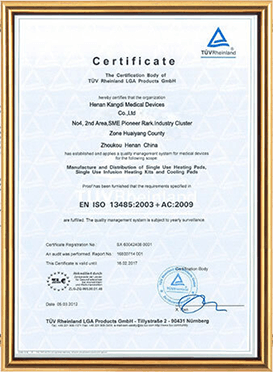
Action 1: ask for the cGMP or QSR audit report and confirm the audit date falls inside the last 12 months. Action 2: ask for a label claim audit against 21 CFR Part 348 and confirm no treats, cures, or heals language survives. Action 3: ask for a Drug Facts review under 21 CFR Part 201.66 and confirm all 4 sections are present. Action 4: ask for per-batch concentration certificates showing both the certificate of analysis value and the in-process value. Action 5: ask for the 21 CFR Part 207 registration and confirm the NDC labeler code is valid.
Marry Han's Dubai buyer ran all 5 action items before signing the next 50,000-unit order, and the shipment cleared its pre-shipment audit on the first pass. Wang Lei keeps that file as a reference for Middle East and Africa buyers, and our remediation case library is available on request via our contact page. Wang Lei, Liu Jianhua, and Zhang Ting review every US-bound contract before release.
Final Takeaways for 2026 Buyers
Five triggers, 7 checklist steps, 5 penalty tiers, 5 jurisdictions. The pattern across every file we have opened since 2018 is blunt: the brands that lose money audited the label after printing instead of before. Ask for the documents in writing, verify the concentrations per batch, and keep a 5-year trigger log. The pain relief patch OEM that audits first is the one that ships on time. Read how our regulatory and production leads work day to day on our about page.
Frequently Asked Questions
Do pain relief patches need FDA approval?
Not if the patch fits an OTC monograph. A single-ingredient menthol patch at or below 16%, a lidocaine patch at or below 4%, or a capsaicin patch at or below 0.025% can be marketed under 21 CFR Part 348 with no new drug application. Step outside the monograph, or add a combination it does not cover, and you are an unapproved new drug under 21 U.S.C. 355. In our files, 3 of the last 5 cases failed for exactly that reason.
What is the biggest warning letter trigger for pain relief patch OEM contracts?
Label language. Words such as treats, cures, or heals convert an OTC patch into an unapproved drug under 21 U.S.C. 321(g)(1). Marry Han has watched buyers reject a factory over a 3-word label change, and that is the right call: the fix costs USD 0 before printing and USD 15,000 or more after.
Can a pain relief patch OEM ship menthol at 16%?
Yes, 16% is the monograph ceiling for a single-ingredient menthol patch, but the number has to hold on every batch. Our 2025-09-03 case failed not at the ceiling but at 21 CFR Part 211.192, because the certificate of analysis read 15.2% while the in-process test read 16.4%.
How long do we have to file a MedWatch report?
15 calendar days for a serious unexpected adverse event, on Form FDA 3500A per 21 CFR Part 314.80(c)(1)(i). Our 2024-08-15 case missed 17 reports, which turned a routine complaint file into Trigger 4 on the warning letter.
Does a brand owner need FDA establishment registration?
If the product is a drug, both the facility and the labeler need registration under 21 CFR Part 207, renewed annually between October 1 and December 31, plus a valid NDC labeler code and a current drug listing. Ask your pain relief patch OEM for the registration date, not only the certificate.
Is a lidocaine patch a drug or a device in the US?
An OTC lidocaine patch at or below 4% is a drug under the monograph. A patch that combines drug action with device claims can be regulated as a combination product, which pulls in 21 CFR Part 820 QSR alongside 21 CFR Part 211. That dual pathway is why Trigger 5 costs the most.
How do EU MDR 2017/745 and EU Cosmetics Regulation 1223/2009 differ for patches?
EU MDR 2017/745 Class I, Rule 1 covers non-invasive patches for transient use that make medical claims, and it requires technical documentation plus an EU declaration of conformity. If the patch makes cosmetic claims only, EU Cosmetics Regulation 1223/2009 applies and a CPNP notification replaces the technical file. Picking the wrong lane was our second most common 2025 audit finding.
How many documents should we request before signing a pain relief patch OEM contract?
Six at minimum: a cGMP or QSR audit report, a Drug Facts review, a per-batch concentration certificate, a 15-day MedWatch SOP, a 21 CFR Part 207 registration confirmation, and an EU MDR 2017/745 technical file or CPNP confirmation when Europe is in scope. Our team answers documentation questions within 1 to 2 business days.
How much does an FDA warning letter cost?
Between USD 5,000 and USD 15,000 for a Tier 1 letter with no recall, and up to USD 10 million at Tier 5 with criminal exposure. Our 5 cases averaged USD 17,800 in direct refunds alone, before legal fees, rework, and lost shelf time.
What is the fastest way to verify a pain relief patch OEM cGMP status?
Ask for the audit report date and the certifying body, then cross-check the FDA registration under 21 CFR Part 207 and the ISO 13485 certificate. An audit older than 12 months, or a registration that lapsed in the October to December window, is a stop sign in our own supplier reviews.
Related Guides
- Pain Relief Patch OEM Services
- Cooling Gel Patch OEM Manufacturing
- Heat Patch OEM Manufacturing
- KONGDY OEM and ODM Services
- Contact KONGDY for a 2026 OEM Risk Review
About KONGDY
Henan Kongdy Medical Devices Co., LTD. (KONGDY) was founded in 1989 and has 37 years of production experience as of 2026 in pain relief patches, slimming patches, capsicum plasters, heat patches, cooling gel patches, detox foot patches, steam eye masks, mosquito repellent patches, and nose strips. Headquartered in Henan, China, KONGDY operates a 100,000-class GMP workshop (built 2008) and obtained ISO 13485 medical device Quality Management System European Standard Certification in 2014. The company runs OEM and ODM services for international brands across multiple regulatory pathways. For 2026 procurement evaluation, our qualification team can provide ISO 13485 certificate, GMP workshop audit reports, and reference customer case studies upon request via our contact page.


